
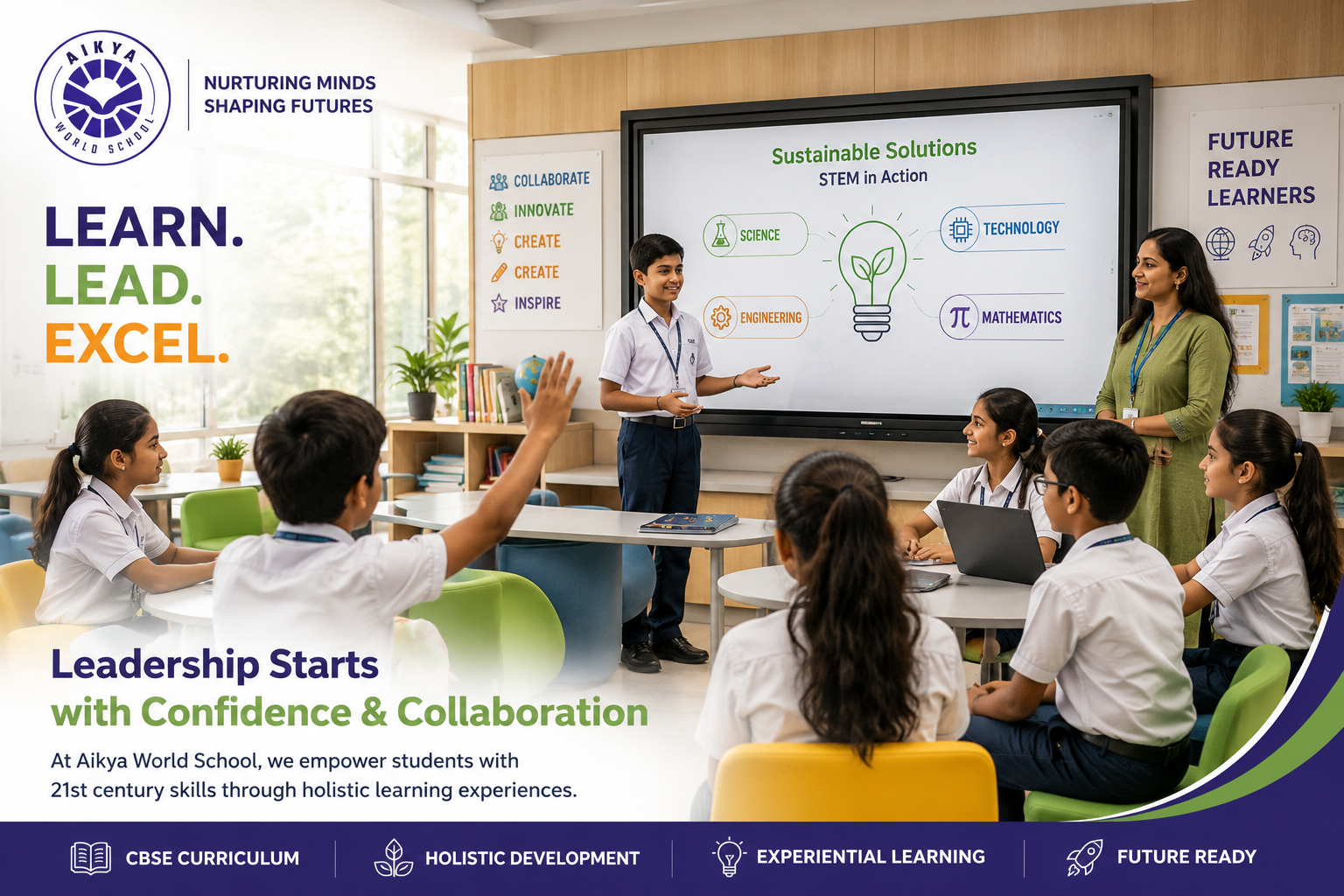
Today’s rapidly changing world requires children to develop much more than subject knowledge. Leadership, communication, adaptability, and critical thinking have become essential life skills that shape future success.
This is why understanding how schools develop leadership skills in students has become increasingly important for parents choosing the right educational environment. Schools that combine academics with leadership opportunities help children become independent thinkers, effective communicators, and compassionate individuals prepared for real-world challenges.
Modern CBSE schools no longer focus solely on classroom instruction. They create opportunities for students to lead projects, participate in collaborative activities, solve real-life problems, and take responsibility from an early age. These experiences nurture confident learners who are ready to excel in higher education, future careers, and life beyond school.
What Are Leadership Skills for Students?
Leadership skills are the abilities that help students influence, inspire, and work effectively with others while taking responsibility for their actions. Contrary to common belief, leadership is not limited to becoming a class captain or school prefect. It is about developing qualities that enable children to make thoughtful decisions, communicate confidently, and contribute positively in any situation.
Leadership Begins with Everyday Experiences
Children build leadership skills through everyday school experiences, such as participating in group discussions, leading classroom projects, organizing events, helping classmates, or volunteering during school activities. These small opportunities gradually develop confidence and responsibility.
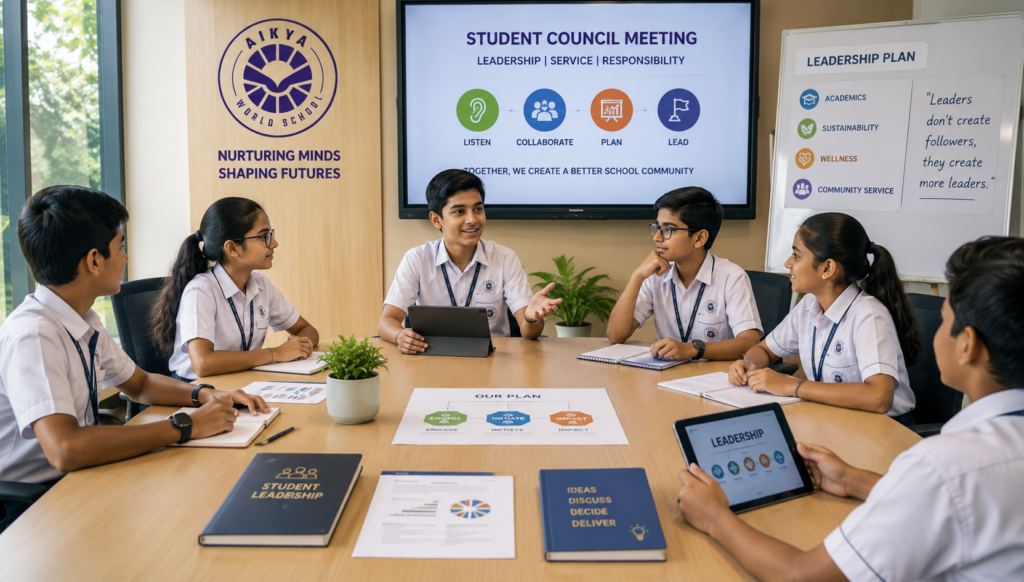
Essential Leadership Skills Every Student Should Develop
Strong leadership skills in students are built on a combination of essential life skills, including:
- Effective communication
- Critical thinking
- Decision-making
- Teamwork
- Responsibility
- Emotional intelligence
- Problem-solving
- Adaptability
- Time management
- Self-confidence
These skills prepare students not only for academic success but also for future professional and personal achievements.
Why Are Leadership Skills Important for Students?
Leadership skills help children become proactive learners and responsible individuals. They encourage students to think independently, collaborate with others, and confidently face challenges.
In today’s competitive world, employers and universities increasingly value leadership qualities alongside academic achievements. Students who develop these skills early are often better prepared to handle real-life situations.
Leadership Builds Confidence
Children who take on responsibilities at school gradually become more confident in expressing their ideas and making decisions. Whether presenting a project, leading a team, or participating in debates, these experiences strengthen self-belief.
Leadership Encourages Better Decision-Making
Leadership teaches students how to analyze situations, evaluate different perspectives, and make informed choices. These decision-making abilities benefit students throughout their academic journey and future careers.
Why Leadership Skills Are Essential in Childhood
Childhood is the ideal stage to develop leadership qualities because habits, attitudes, and social skills are formed during these early years. Schools play a crucial role in creating environments where children feel encouraged to explore, collaborate, and take initiative.
Leadership Supports Personal Growth
Children who develop leadership skills become:
- More independent
- Better communicators
- Emotionally resilient
- Responsible decision-makers
- Active contributors in school and society
These qualities help children navigate challenges with confidence.
Leadership Prepares Children for the Future
Future careers demand more than technical knowledge. Professionals are expected to collaborate, solve problems, adapt to change, and lead diverse teams. Developing leadership during childhood ensures students are prepared for these expectations.
Advantages of Leadership Skills in Students
Leadership skills benefit children far beyond their school years. They shape character, improve academic performance, and prepare students to thrive in college, careers, and life.
Schools that intentionally nurture leadership help students become independent thinkers who can confidently handle challenges and inspire others.
Leadership skills Improves Academic Performance
Leadership and academics go hand in hand. Students who take initiative in the classroom are often more engaged, organized, and motivated to learn.
Leadership skills help students:
- Participate actively in discussions
- Set academic goals
- Manage time effectively
- Stay accountable for assignments
- Collaborate during group projects
- Develop confidence while presenting ideas
These habits contribute to stronger academic outcomes and lifelong learning.
Leadership Creates Self-Motivated Learners
Students who learn to lead are less dependent on constant guidance. They become self-driven, take ownership of their learning, and develop the confidence to overcome obstacles independently.
Leadership Builds Essential Life Skills
Beyond academics, leadership nurtures qualities that help students succeed in every stage of life.
These include:
- Confidence
- Integrity
- Adaptability
- Emotional intelligence
- Decision-making
- Conflict resolution
- Responsibility
- Resilience
- Collaboration
These life skills remain valuable throughout higher education and professional careers.

Role of Schools in Leadership Skills Development
Schools play a vital role in creating an environment where leadership skills in students naturally develop. Rather than teaching leadership through theory alone, effective schools provide meaningful opportunities for students to practise leadership every day.
Leadership Skills Through Classroom Learning
Teachers encourage leadership skills by giving students opportunities to:
- Lead classroom discussions
- Present projects
- Mentor classmates
- Work in collaborative groups
- Solve real-world challenges
These experiences encourage initiative and build confidence from an early age.
Leadership Through Co-Curricular Activities
Leadership often develops beyond traditional classroom lessons through meaningful co-curricular activities and real-world experiences.
Activities that strengthen leadership include:
- Student council
- House captain responsibilities
- School assemblies
- Debate competitions
- Sports teams
- Cultural festivals
- Community service
- Science exhibitions
- Entrepreneurship clubs
- Innovation projects
Each activity helps students learn accountability, teamwork, and effective communication.
Conclusion
Understanding how schools build leadership skills in students helps parents make informed decisions about their child’s education. While strong academic foundations remain important, leadership qualities such as confidence, communication, responsibility, empathy, and critical thinking prepare children to succeed far beyond the classroom.
Schools that encourage participation in leadership opportunities, extracurricular activities, sports, collaborative projects, and experiential learning help students become responsible, resilient, and future-ready individuals.
At Aikya World School, leadership development is an integral part of holistic education. Through student-centered learning, collaborative activities, sports, cultural programs, and experiential opportunities, students are encouraged to develop the confidence and skills needed to excel in academics and life.
Help Your Child Become a Future Leader
If you’re looking for the best CBSE school in Bangalore that focuses on academic excellence and leadership development, we’d love to welcome you to Aikya World School.
Book a Campus Visit to experience our learning environment firsthand with the Best school in Jayanagar.
Submit an Enquiry Form and take the first step toward your child’s brighter future.
Frequently Asked Questions:
1. How do schools build leadership skills in students?
Schools build leadership skills through classroom discussions, project-based learning, student councils, sports, extracurricular activities, public speaking, collaborative projects, and experiential learning opportunities.
2. Why are leadership skills important for students?
Leadership skills improve confidence, communication, teamwork, decision-making, responsibility, and problem-solving, preparing students for academic success and future careers.
3. What are the most important leadership skills students should develop?
Students should focus on communication, teamwork, emotional intelligence, critical thinking, adaptability, responsibility, resilience, and decision-making.
4. How can parents encourage leadership skills at home?
Parents can encourage independence, assign responsibilities, promote decision-making, appreciate effort, and support participation in extracurricular and leadership activities.
5. How do extracurricular activities help develop leadership?
Sports, cultural programs, debates, student councils, and community service teach teamwork, communication, accountability, confidence, and resilience.
6. Why is holistic education important for leadership development?
Holistic education balances academics with sports, arts, life skills, and experiential learning, helping students become confident, compassionate, and future-ready leaders.