
Introduction
Every parent wants their child to grow into a confident, capable, and well-rounded individual. While academic excellence remains an important part of education, today’s rapidly changing world demands much more than good grades. Students also need communication skills, creativity, leadership, teamwork, adaptability, and critical thinking to succeed in higher education, future careers, and everyday life.
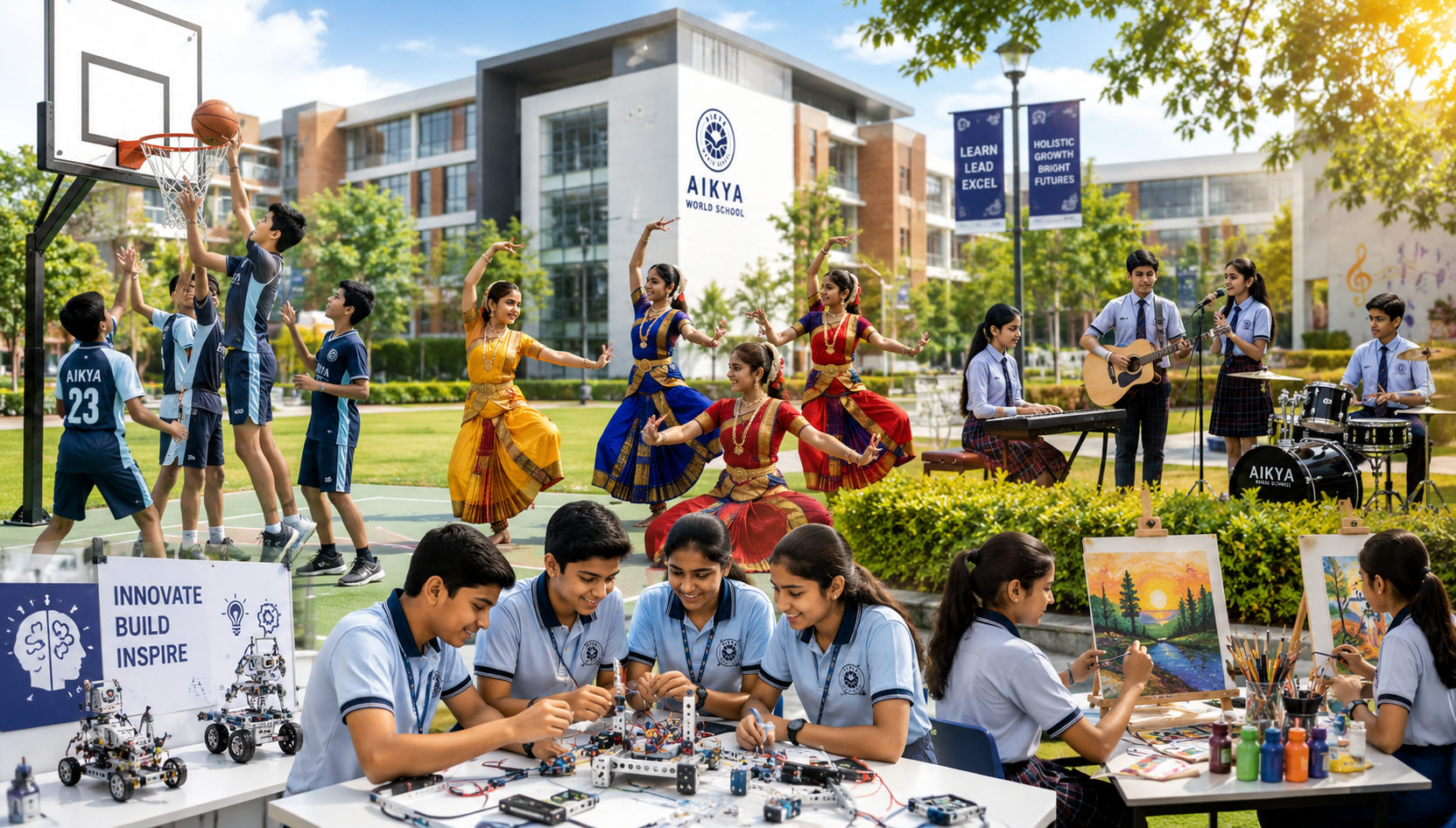
This is where co-curricular activities become an essential part of modern education. Whether it’s participating in sports, music, dance, robotics, debates, drama, public speaking, or community service, these activities help children apply classroom learning in real-life situations while developing valuable life skills.
In recent years, parents have increasingly looked beyond academic results when choosing a school. They seek institutions that encourage holistic development by providing opportunities for students to explore their interests, build confidence, and become future-ready individuals.
At Aikya World School, we believe education should inspire curiosity, creativity, collaboration, and lifelong learning. Through a balanced blend of academics and co-curricular activities, students gain the skills they need to thrive both inside and outside the classroom.
What Are Co-Curricular Activities?
Co-curricular activities are organized programs that take place alongside the academic curriculum. Unlike extracurricular activities, which are often optional and separate from classroom learning, co-curricular activities are closely connected to a student’s educational journey and contribute to overall development.
These activities encourage students to learn through experience, collaboration, creativity, and practical application of knowledge. They also provide opportunities for children to discover their strengths, develop new interests, and build confidence in different environments.
Common Co-Curricular Activities Include:
- Sports and athletics
- Music and dance
- Drama and theatre
- Art and craft
- Debate and public speaking
- Robotics and coding clubs
- STEM projects
- Science exhibitions
- Quiz competitions
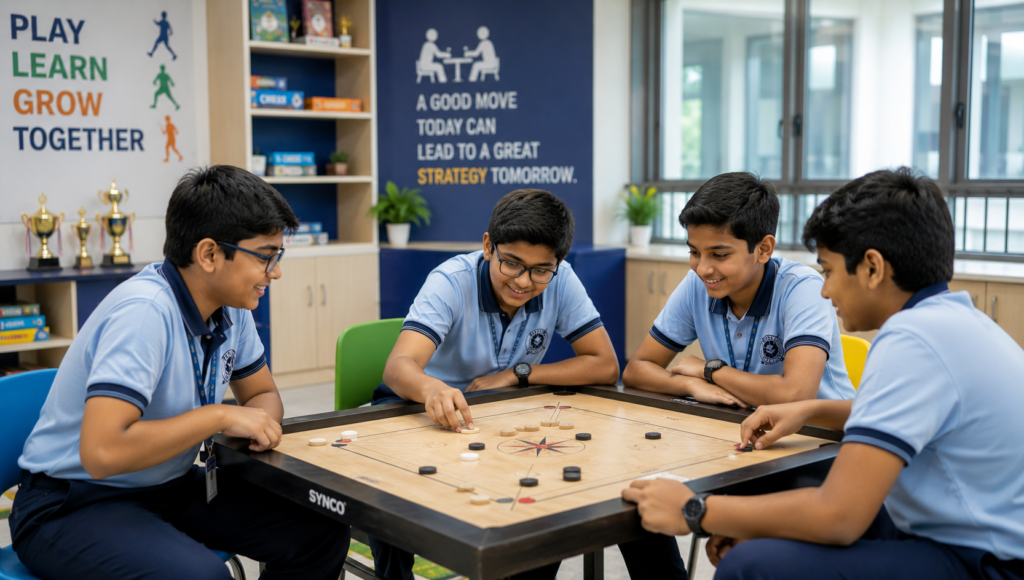
- Chess clubs
- School magazine
- Student council
- Model United Nations (MUN)
- Environmental clubs
- Community service initiatives
Today, co-curricular activities are no longer viewed as optional additions to education they are considered an integral part of a well-rounded learning experience.
Academics vs Co-Curricular Activities
| Academics | Co-Curricular Activities |
Focuses on subject knowledge | Focuses on life skills and personality development |
| Classroom-based learning | Hands-on experiential learning |
Individual assessments | Teamwork and collaboration |
| Theoretical understanding | Practical application of knowledge |
| Grades and examinations | Confidence, creativity, leadership, and communication |
| Curriculum-driven | Interest and skill-driven |
Why Is the Importance of Co-Curricular Activities in Schools Growing?
Education has evolved significantly over the past decade. Today’s employers, universities, and society value individuals who can think critically, communicate effectively, solve problems creatively, and work collaboratively. Academic knowledge alone is no longer enough to prepare students for future success.
This shift has made co-curricular activities an essential part of school education. They provide students with opportunities to explore their interests, develop practical skills, and build confidence through real-world experiences.
Schools that integrate co-curricular activities into their curriculum create learning environments where students are encouraged to grow intellectually, socially, emotionally, and physically.
Modern Education Focuses On:
- Academic excellence
- Communication skills
- Critical thinking
- Creativity and innovation
- Leadership
- Collaboration
- Emotional intelligence
- Problem-solving
- Social responsibility
- Physical well-being
- Adaptability
- Lifelong learning
These skills are increasingly recognized as essential for success in higher education, the workplace, and everyday life.
Types of Co-Curricular Activities
Every child has unique talents and interests. Providing diverse opportunities allows students to explore their passions while developing confidence, resilience, and essential life skills.
Sports and Physical Activities
Sports play a crucial role in promoting physical fitness, discipline, teamwork, perseverance, and sportsmanship. Activities such as football, basketball, athletics, badminton, yoga, swimming, and martial arts encourage students to stay active while building resilience and self-confidence.
Benefits include:
- Improved physical health
- Better concentration
- Increased discipline
- Teamwork and cooperation
- Stress management
- Healthy lifestyle habits
Performing Arts
Music, dance, drama, and theatre encourage creativity, self-expression, and emotional development. Students participating in performing arts often become more confident communicators and develop greater stage presence.
These activities help children:
- Build confidence
- Improve communication
- Express emotions creatively
- Enhance memory and concentration
- Develop presentation skills
Visual Arts and Creative Clubs
Creative clubs encourage students to think imaginatively while developing artistic and design skills.
Examples include:
- Drawing
- Painting
- Sculpture
- Photography
- Craft
- Design projects
Participation in creative activities nurtures innovation, observation, patience, and problem-solving abilities.
STEM and Innovation Clubs
As technology continues to transform industries, STEM-based activities have become increasingly important in schools.
Students participate in:
- Robotics
- Coding
- Science exhibitions
- Innovation challenges
- Mathematics clubs
- Engineering projects
- Artificial Intelligence basics
- Design thinking workshops
These experiences encourage analytical thinking, creativity, experimentation, and real-world problem-solving.
Literary and Leadership Activities
Leadership and communication skills are developed through activities such as:
- Debate competitions
- Public speaking
- Quiz contests
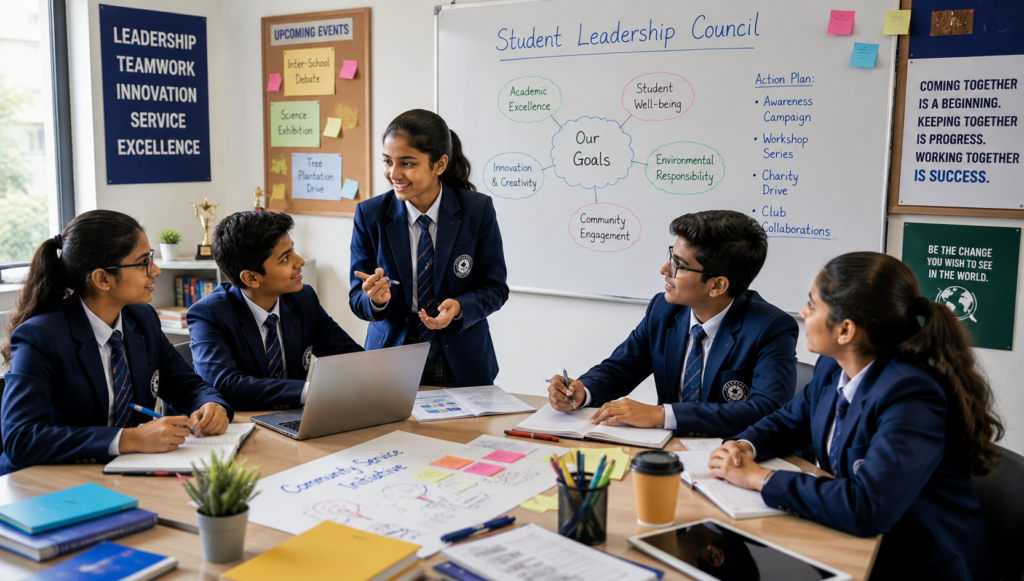
- Student council
- School magazine
- Model United Nations (MUN)
- Entrepreneurship clubs
These opportunities help students become confident decision-makers, effective communicators, responsible leaders, and collaborative team members.
Community Service and Social Responsibility
Community engagement teaches students empathy, compassion, and civic responsibility.
Activities may include:
- Environmental awareness campaigns
- Tree plantation drives
- Charity initiatives
- Volunteering programs
- Cleanliness campaigns
- Social outreach projects
By participating in community service, students develop a deeper understanding of social issues while learning the importance of giving back to society.
Benefits of Co-Curricular Activities for Students
While academic learning equips students with subject knowledge, co-curricular activities transform that knowledge into practical experiences. They encourage students to step outside the classroom, explore their interests, and develop essential life skills that textbooks alone cannot teach.
Participation in co-curricular activities also helps students become more adaptable, independent, and confident qualities that are increasingly valued in higher education and future careers.
1. Builds Self-Confidence
Taking part in activities such as debates, music performances, drama productions, sports competitions, or science exhibitions helps students overcome hesitation and develop self-belief.
Each new experience allows children to:
- Speak confidently in front of others
- Handle success and setbacks positively
- Believe in their abilities
- Become more independent
- Develop a positive self-image
Students who regularly participate in co-curricular activities often become more willing to take initiative and embrace new challenges.
2. Enhances Communication Skills
Communication is one of the most important life skills every child needs.
Activities like:
- Public speaking
- Debate competitions
- Drama
- Storytelling
- School assemblies
- Group discussions
help students express ideas clearly, listen actively, and communicate effectively with peers, teachers, and others.
Strong communication skills contribute to better academic performance, stronger relationships, and greater confidence in future professional settings.
3. Develops Leadership Qualities
Leadership is learned through experience rather than theory.
Activities such as student council, event management, sports captaincy, and organizing school programs encourage students to:
- Take responsibility
- Make decisions
- Solve problems
- Motivate others
- Work collaboratively
- Manage time effectively
These experiences prepare students to become responsible leaders both inside and outside the classroom.
4. Encourages Teamwork and Collaboration
Many co-curricular activities involve working with others to achieve shared goals.
Whether participating in team sports, robotics competitions, cultural events, or community service projects, students learn how to:
- Respect different perspectives
- Share responsibilities
- Resolve conflicts
- Cooperate effectively
- Support team members
These collaboration skills are essential for higher education, workplaces, and everyday life.
5. Improves Creativity and Innovation
Creativity extends beyond art—it involves thinking differently, solving problems, and generating new ideas.
Activities such as:
- Music
- Dance
- Theatre
- Art
- Robotics
- Design challenges
- Innovation clubs
encourage students to explore their imagination while developing original solutions to real-world problems.
Creative thinking is increasingly recognized as one of the most valuable skills for the future.
6. Promotes Physical and Mental Well-Being
Sports and physical activities contribute significantly to students’ overall health.
Regular participation helps:
- Improve fitness
- Build stamina
- Reduce stress
- Improve concentration
- Develop discipline
- Encourage healthy habits
Physical activity also supports emotional well-being by helping students manage anxiety and maintain a balanced lifestyle.
7. Develops Essential Life Skills
Co-curricular activities provide real-life learning experiences that prepare students for future challenges.
Students develop:
- Decision-making
- Time management
- Adaptability
- Responsibility
- Problem-solving
- Emotional intelligence
- Resilience
- Organizational skills
These life skills remain valuable long after students complete their formal education.
The 4 Big C’s: How Co-Curricular Activities Prepare Students for the Future
These four competencies, often referred to as the 4 Big C’s, are at the heart of 21st-century learning.
| Skill | How Co-Curricular Activities Help |
| Communication | Debates, public speaking, drama, presentations, storytelling |
| Collaboration | Team sports, robotics clubs, group projects, community service |
| Critical Thinking | STEM activities, coding, science fairs, quizzes, chess |
| Creativity | Music, dance, art, theatre, innovation clubs, design challenges |
Communication
Students become confident speakers by expressing ideas clearly, listening actively, and presenting their thoughts effectively.
Collaboration
Working in teams teaches students to appreciate diverse perspectives, solve conflicts constructively, and achieve shared goals together.
Critical Thinking
Students learn to evaluate information, analyze situations, and develop logical solutions through inquiry-based learning and problem-solving activities.
Creativity
Creative experiences encourage curiosity, imagination, and innovation—skills that help students adapt to future opportunities and challenges.
How Co-curricular Activities Improve Academic Performance
Many parents worry that spending time on activities outside the classroom may reduce study time. However, when students maintain a healthy balance, co-curricular activities often enhance academic performance by strengthening the skills required for effective learning.
Better Concentration
Physical activity and creative engagement refresh the mind, helping students stay focused during classroom lessons.
Improved Time Management
Balancing academics with activities teaches students how to prioritize responsibilities and manage their schedules effectively.
Greater Motivation to Learn
Hands-on experiences make learning enjoyable, encouraging curiosity and a deeper interest in classroom subjects.
Enhanced Problem-Solving Skills
Activities such as robotics, coding, quizzes, and science projects encourage analytical thinking that supports academic learning.
Increased Classroom Participation
Students who build confidence through co-curricular activities are often more willing to ask questions, share ideas, and participate actively during lessons.
Myths vs Facts About Co-Curricular Activities
| Myth | Fact |
| Co-curricular activities distract students from studies. | When balanced effectively, they improve discipline, concentration, and overall academic performance. |
| Only talented students benefit from co-curricular activities. | Every child develops valuable life skills by participating, regardless of their initial abilities. |
| Sports alone are enough. | A balanced combination of sports, arts, leadership, STEM, and creative activities supports comprehensive development. |
| These activities are only for entertainment. | They play an important role in developing communication, leadership, teamwork, creativity, and emotional resilience. |
| Academic success is more important than co-curricular participation. | Both academics and co-curricular activities complement each other, contributing to a child’s holistic growth and future readiness. |
Why Schools Should Encourage Co-curricular Participation
Co-curricular activities in schools should not be viewed as optional additions to education.
Education today is about preparing students not only for examinations but also for life. Schools that prioritize holistic education recognize that learning happens in classrooms, playgrounds, laboratories, art studios, and community projects alike.
By offering diverse co-curricular opportunities, schools help students:
- Build self-confidence.
- Discover hidden talents.
- Develop leadership qualities.
- Improve communication and collaboration.
- Learn resilience through challenges.
- Become responsible and socially aware citizens.
An environment that values both academic excellence and personal development creates confident learners who are better prepared for the future.
The Role of Parents in Encouraging Co-Curricular Participation
Schools provide opportunities, but parents create the encouragement children need to participate wholeheartedly. Rather than focusing solely on achievements or winning competitions, parents should celebrate effort, improvement, and the joy of learning.
Why Co-Cirricular Activities Matters at Aikya World School
As a CBSE Cirriculum, we combine academic excellence with co-curricular experiences to nurture confident, creative, and future-ready learners.
At Aikya World School, co-curricular activities are an important part of creating a balanced learning experience alongside academics. Students are encouraged to explore their interests through sports, music, dance, drama and visual arts, giving them opportunities to discover their talents, express themselves creatively and develop confidence.
Sports and Physical Activities
Aikya’s sports programme includes opportunities for students to participate in activities such as basketball, football, cricket, pickleball and kho kho, helping them develop physical fitness as well as collaboration and decision-making skills.
STEAM and Hands-On Learning
Aikya World School also provides students with opportunities to explore Science, Technology, Engineering, Arts and Mathematics (STEAM) through hands-on learning experiences in its dedicated STEAM Lab.
Music
Aikya provides a dedicated music environment with opportunities to learn instruments and participate in ensemble activities, helping students develop concentration, creativity and confidence.
Dance
Students at Aikya explore different forms of dance, including ballet, tap, traditional Indian, folk, modern and street dance, and also have opportunities to develop their own performances.
Drama and Theatre
At Aikya, drama is integrated into the curriculum across grade levels, giving students opportunities to develop their creative and performance skills.
Recognized as the Emerging CBSE School of the Year – Education Today 2025, Aikya World School is committed to helping students become confident learners, responsible citizens, and compassionate leaders. For parents exploring Top CBSE schools in Bangalore, choosing a school that values holistic education can make a lasting difference in a child’s academic and personal journey.
Wrapping Up
The importance of co-curricular activities in schools extends far beyond recreation. These experiences help children discover their strengths, build confidence, develop leadership qualities, improve communication, and prepare for the challenges of an ever-changing world.
While academic excellence remains essential, a truly meaningful education also nurtures creativity, resilience, teamwork, and emotional intelligence. When schools provide opportunities for students to participate in sports, arts, STEM programs, leadership activities, and community initiatives, they create an environment where children can thrive both inside and outside the classroom.
Give Your Child the Advantage of Holistic Learning
Every child has unique talents waiting to be discovered. The right educational environment nurtures these abilities while fostering academic excellence, creativity, leadership, and lifelong learning.
If you’re looking for the best school in Jayanagar, Bangalore that combines a strong academic curriculum with meaningful co-curricular opportunities, Aikya World School is here to support your child’s journey.
Take the Next Step
Schedule a Campus Visit
Meet Our Admissions Team
Explore Our STEAM Lab and Learning Spaces
Admissions Open – Enquire Today
Apply Now | Book a Campus Tour | Contact Our Admissions Team
Frequently Asked Questions
1. Why are co-curricular activities important in schools?
Co-curricular activities help students develop confidence, leadership, teamwork, creativity, communication skills, and emotional resilience while supporting overall academic and personal growth.
2. How do Co-curricular activities improve academic performance?
They improve time management, concentration, discipline, motivation, and problem-solving skills, which positively influence classroom learning.
3. What are the best Co-curricular activities for school students?
Sports, music, dance, robotics, coding, debate, drama, public speaking, art, science clubs, and community service are among the most beneficial activities.
4. How do Co-curricular activities help with future careers?
They develop transferable skills such as leadership, communication, collaboration, adaptability, and critical thinking that employers highly value.
5. Do Co-curricular activities reduce academic stress?
Yes. Physical activities, creative arts, and hobbies provide healthy outlets that help students manage stress, improve mental well-being, and maintain a balanced lifestyle.