
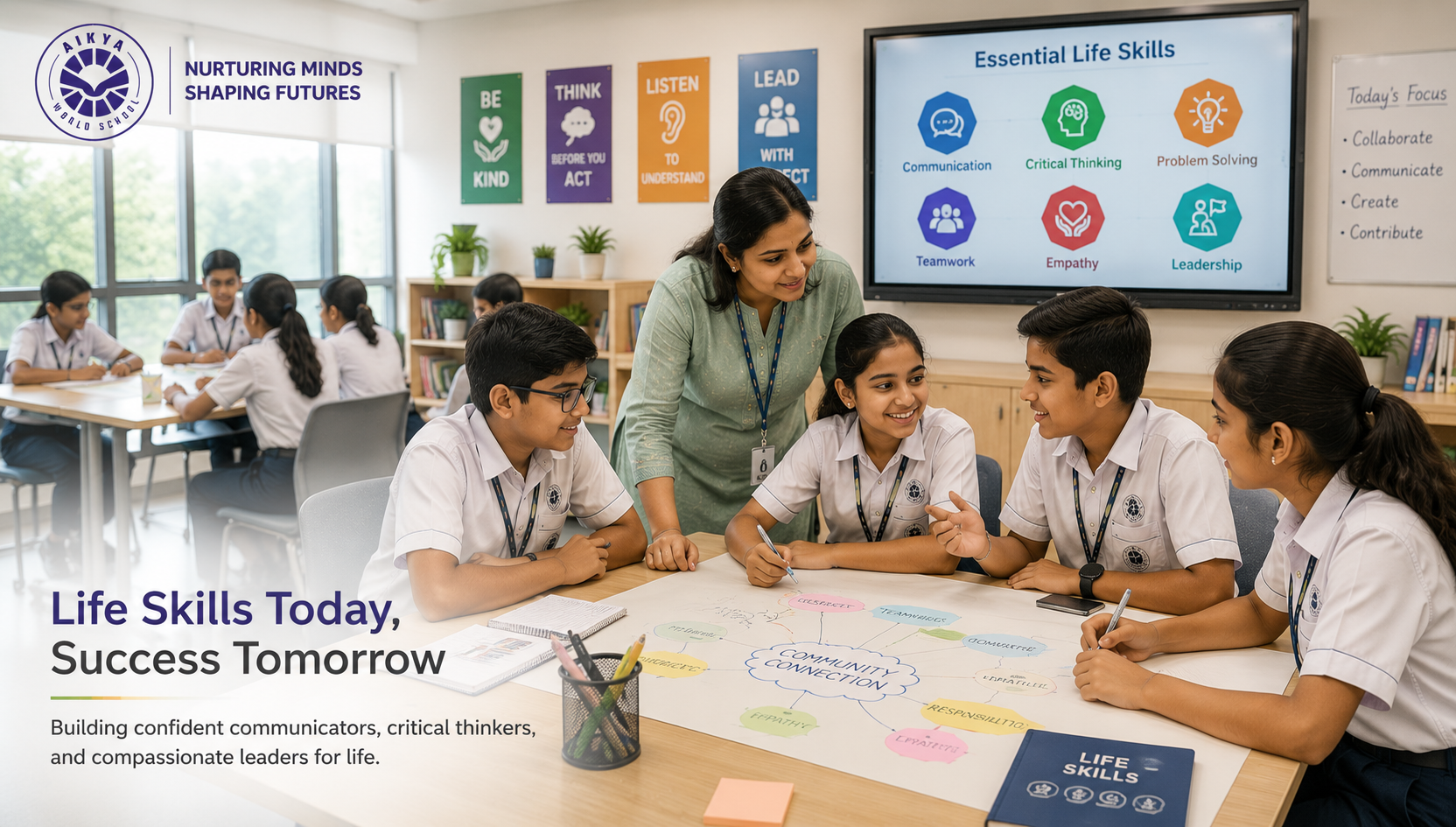
As parents, we often focus on academic success, exam scores, and choosing the right school. But in today’s fast-changing world, children need more than textbooks and grades to thrive. They need confidence, communication skills, emotional resilience, and the ability to make wise decisions.
This is where life skills education becomes an important question for every parent. Life skills education helps children develop practical abilities that prepare them for real-world challenges, future careers, and meaningful relationships. It is not just about learning facts; it is about learning how to live responsibly, think independently, and grow into capable individuals.
For families exploring CBSE schools in Bangalore and holistic education options, understanding life skills education can help make a more informed admission decision.
Quick Answer: What Is Life Skills Education?
Life skills education is the process of teaching children essential personal, social, and emotional skills that help them manage everyday challenges effectively. It includes communication, critical thinking, decision-making, problem-solving, emotional intelligence, and self-awareness.
In simple terms, life skills education prepares students not only for exams but also for life beyond the classroom.
What Is Life Skills Education?
Life skills education is a structured approach to helping children develop abilities that enable them to handle daily situations confidently and responsibly. The World Health Organization (WHO) describes life skills education around skills that help individuals deal effectively with the demands and challenges of everyday life. Its framework includes skills related to decision-making, problem-solving, communication, interpersonal relationships, self-awareness, empathy, critical thinking, creative thinking, and coping with emotions and stress.
What Are the 10 Life Skills Identified by WHO?
According to the WHO framework, life skills can be grouped into 10 important areas that help children and young people navigate everyday challenges and relationships.
1. Self-Awareness
Self-awareness helps children understand their own emotions, strengths, weaknesses, interests and values. Developing self-awareness also helps children build confidence and recognize areas where they can continue to improve.
2. Empathy
Empathy is the ability to understand and appreciate another person’s feelings and perspective. Children who develop empathy can become more considerate of their classmates, friends and family members.
3. Communication Skills
Communication skills help children express their thoughts, feelings and ideas clearly while also listening to others. Developing these skills can help students participate confidently in classroom discussions, work effectively in teams and communicate respectfully in everyday situations.
4. Interpersonal Relationship Skills
Interpersonal relationship skills help children build and maintain healthy relationships with others. Students learn how to cooperate, share responsibilities, resolve disagreements and respect different perspectives.
5. Decision-Making
Decision-making helps children evaluate different choices and consider their possible consequences before acting. As students develop this skill, they can become more confident in making age-appropriate decisions independently.
6. Problem-Solving
Problem-solving teaches children how to approach challenges systematically instead of becoming overwhelmed by them. Practical projects, puzzles, group activities and real-life situations can provide meaningful opportunities to practise this skill.
7. Creative Thinking
Creative thinking encourages children to look at situations from different perspectives and develop new ideas or approaches. It goes beyond artistic activities and can be applied to everyday challenges and academic learning.
8. Critical Thinking
Critical thinking helps students examine information, ask questions, identify assumptions and consider whether something is reliable or reasonable. This skill is valuable for academic learning as well as everyday decision-making.
9. Coping with Emotions
Learning to cope with emotions helps children recognize and manage feelings such as anger, disappointment, excitement, frustration and sadness in healthy ways. This can support emotional regulation, healthy relationships and positive behaviour.
10. Coping with Stress
Coping with stress helps children manage pressure and challenging situations in constructive ways. Students can learn to recognize signs of stress and use healthy strategies such as talking to a trusted adult, taking breaks, staying physically active,these skills can help them approach challenges with greater resilience.
Why Is Life Skills Education Important for Students?
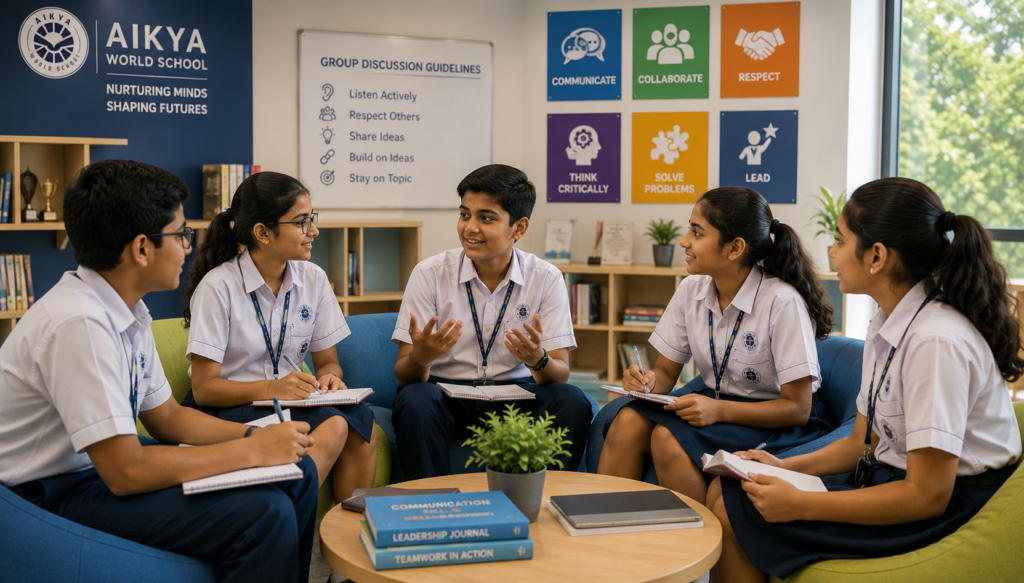
Life skills education plays a crucial role in shaping well-rounded individuals. It helps students become not only successful learners but also responsible citizens and future leaders with leadership skills.
Academic Benefits
Students with strong life skills often perform better academically because they can manage time, stay organized, and approach challenges with a positive mindset.
Emotional Benefits
Life skills education helps children understand and regulate their emotions, reducing anxiety and improving overall well-being.
Social Benefits
Children learn how to communicate effectively, work in teams, and respect diverse perspectives.
Career Benefits
Future employers value skills such as communication, leadership, adaptability, and problem-solving qualities developed through life skills education.
What Research Says About Life Skills Education
According to the World Health Organisation (WHO), life skills help children and adolescents deal effectively with the demands and challenges of everyday life. WHO identifies skills such as decision-making, problem-solving, communication, critical thinking, empathy and coping with emotions and stress as important life skills that can be developed through learning and practice.
India is home to more than 253 million adolescents aged 10–19, according to UNICEF. With such a large adolescent population, developing transferable and life skills can play an important role in helping young people navigate education, relationships, challenges and their transition into adulthood.
Source: UNICEF India, Comprehensive Life Skills Framework.
How Is Life Skills Education Taught in Schools?
Life skills are most effectively developed through opportunities for students to practise skills in realistic and interactive situations rather than simply memorising definitions. The WHO approach emphasizes participatory and student-centred learning.
Role Play
Students practise communication, empathy and decision-making through realistic scenarios.
Group Activities
Collaborative activities help students develop teamwork and interpersonal skills.
Projects
Projects allow students to plan, solve problems, make decisions and take responsibility.
Discussions
Classroom discussions encourage students to express ideas, listen to others and think critically.
Sports
Sports can provide opportunities to develop teamwork, discipline, communication, resilience and decision-making.
Leadership Activities
Student-led activities can develop responsibility, confidence and communication.
Problem-Solving Activities
Practical challenges encourage students to analyse situations and develop solutions.
Real-Life Situations
Students can apply life skills through everyday responsibilities and authentic learning experiences.
10 Essential Life Skills Every Child Should Learn
Communication Skills
Children should learn how to express their thoughts clearly, listen actively, and interact respectfully with others.
Critical Thinking
Critical thinking helps students analyze information, evaluate options, and make logical decisions.
Emotional Intelligence
Understanding emotions helps children build empathy, manage conflicts, and maintain healthy relationships.
Decision-Making
Students should learn how to weigh consequences and choose the best course of action in different situations.
Problem-Solving
Problem-solving skills encourage children to think creatively and find practical solutions to challenges.
Teamwork and Collaboration
Working with others teaches children cooperation, respect, and shared responsibility.
Self-Awareness
Self-awareness helps children understand their emotions, strengths, weaknesses, values, and how their actions affect others.
Creative Thinking
Creative thinking encourages children to explore new ideas, look at challenges from different perspectives, and find innovative solutions.
Coping with Stress
Learning healthy ways to manage stress helps children handle pressure, challenges, and difficult situations with greater resilience.
Coping with Emotions
Children who learn to recognize and manage their emotions can respond to frustration, anger, disappointment, and other feelings in healthier ways.
How Schools Can Help Students Develop Life Skills
Life skills are not learned only through lectures. They are developed through practice, experience, and guidance from parents and teachers.
Ways Children Can Learn Life Skills
- Participate in group activities
- Engage in sports and Co-curricular activities
- Take part in debates and public speaking
- Practice decision-making at home
- Solve real-life problems
- Volunteer in community activities
- Participate in project-based learning
How Is Life Skills Education Taught in Schools?
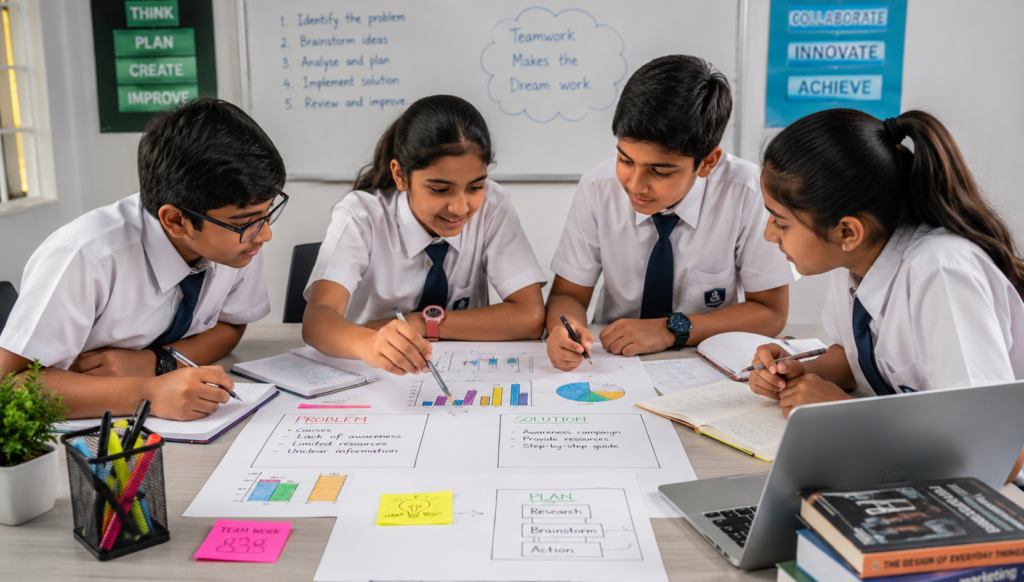
Schools play a vital role in creating opportunities for students to develop life skills. A supportive school environment encourages children to explore, communicate, collaborate, and lead.
How Schools Build Life Skills
- Classroom discussions and presentations
- Group projects and collaborative learning
- Sports and physical activities
- Arts and cultural programs
- Leadership opportunities
- Community service initiatives
- STEM and experiential learning activities
How Parents Can Develop Life Skills at Home
- giving children age-appropriate responsibilities
- allowing them to make simple decisions
- encouraging problem-solving
- teaching emotional vocabulary
- encouraging communication
- involving children in household tasks
- allowing children to learn from mistakes
Life Skills Education at Aikya World School
At Aikya World School, life skills development forms part of a broader approach to holistic learning. Through co-curricular activities, sports, STEAM Lab, leadership activities, projects and experiential learning students have opportunities to develop communication, collaboration, problem-solving, confidence and responsibility alongside their academic learning.
Conclusion
Understanding what life skills education is helps parents recognize that education is not only about academic achievement. It is about preparing children to face life with confidence, responsibility, empathy, and resilience.
Life skills education equips students with the abilities they need to communicate effectively, solve problems, make informed decisions, and adapt to a rapidly changing world. When combined with academic learning, sports, arts, and experiential opportunities, life skills create a strong foundation for holistic development.
At Aikya World School, the best school in Jayangar, we believe that every child deserves an education that nurtures both academic excellence and essential life skills. Our holistic learning environment helps students grow into confident, compassionate, and future-ready individuals.
Ready to Give Your Child a Future-Ready Education?
- Book a Campus Visit
- Speak to Our Admissions Team
- Submit an Admissions Enquiry
- Call Us to Learn More About Our Holistic Learning Approach
Your child’s future begins with the right balance of academics and life skills.
Frequently Asked Questions
1. What is life skills education ?
Life skills education teaches children practical abilities such as communication, decision-making, problem-solving, and emotional intelligence to help them manage everyday challenges.
2. Why is life skills education important for students?
It helps students develop confidence, responsibility, resilience, and social skills that are essential for academic success and future careers.
3. What are the most important life skills for children?
Communication, critical thinking, emotional intelligence, decision-making, problem-solving, teamwork, and self-awareness are among the most important life skills.
4. How can parents teach life skills at home?
Parents can encourage life skills by involving children in daily responsibilities, decision-making, problem-solving, and open communication.
5. How do schools support life skills education?
Schools support life skills education through group projects, sports, extracurricular activities, leadership programs, classroom discussions, and experiential learning.
6. What are the 10 life skills identified by WHO?
According to the World Health Organization (WHO), the 10 core life skills are self-awareness, empathy, critical thinking, creative thinking, decision-making, problem-solving, effective communication, interpersonal relationship skills, coping with stress, and coping with emotions. These skills help children and young people respond positively to everyday challenges and develop personal, social and emotional competence.