
Introduction: Why Do the Preschool Years Matter So Much?
Children between the ages of 3 and 5 are developing rapidly. They are learning to communicate, manage emotions, interact with others, solve simple problems and become more independent. The CDC describes preschool as a period when children’s social, emotional, language and physical abilities continue to develop quickly.
Small, consistent parenting habits can help preschoolers develop confidence, independence and healthy relationships. Here are ten practical tips you can use at home.
10 Parenting Tips for Preschoolers That Actually Work
1. Build a Consistent Routine
Preschoolers feel more secure when they know what to expect. Try to maintain regular times for waking up, meals, play and bedtime.
Parent tip: Create a simple visual chart with pictures of daily activities to help your child follow the routine more independently.
2. Encourage Independence
Give your child opportunities to practise simple tasks, such as putting toys away, washing their hands, choosing clothes or packing their school bag with supervision. These small responsibilities encourage confidence and decision-making.
Parent tip: Allow your child time to try before stepping in to help. The CDC recommends encouraging preschoolers to help with simple chores and offering limited choices.
3. Handle Tantrums Calmly
Preschoolers are still learning to manage their emotions. When a tantrum occurs, stay calm, acknowledge your child’s feelings and set clear limits on unacceptable behaviour.
For example, say, “I know you’re upset that playtime is over, but it’s time to go home.” Consistent, age-appropriate responses can help children learn healthier ways to express frustration. The American Academy of Pediatrics’ guidance on effective discipline offers further advice.
4. Encourage Communication
Everyday conversations help children develop vocabulary, express their feelings and organise their thoughts. Ask open-ended questions, listen patiently and encourage your child to explain their ideas.
Try asking: “What was your favourite part of the day?” or “What do you think will happen next?” Give your child time to answer without rushing them.
5. Make Reading a Daily Habit
Reading together encourages language development, imagination and a love of stories. Spend around 10–15 minutes reading a picture book, discussing the characters or guessing what might happen next.
Choose books your child enjoys and make reading a relaxed family activity rather than a lesson. The CDC’s parenting guidance for preschoolers also recommends reading together regularly.
6. Let Children Learn Through Play
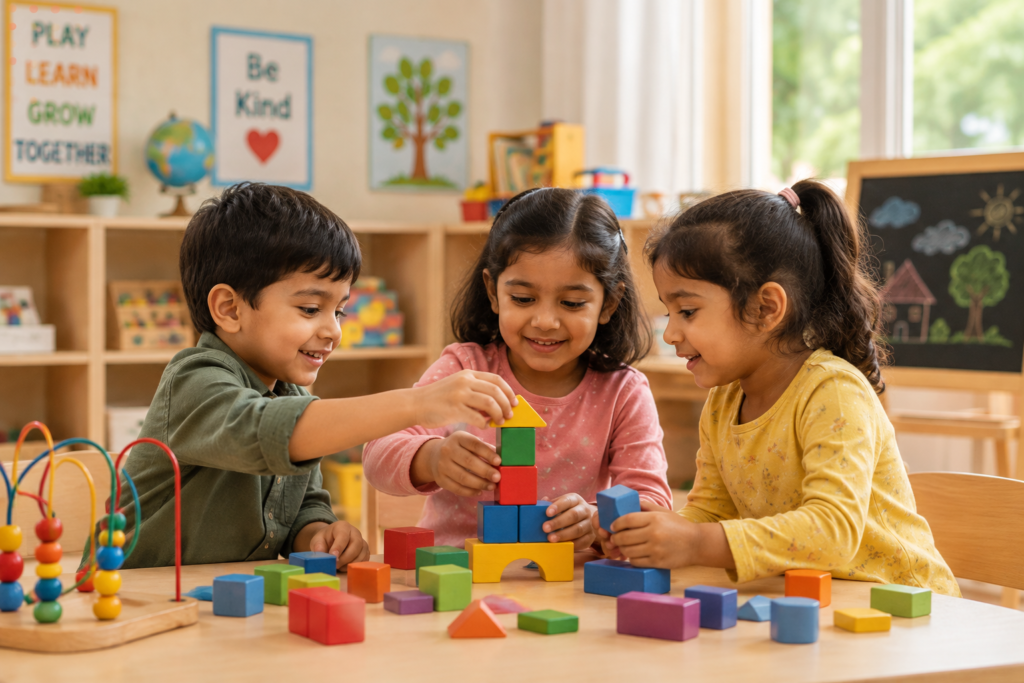
Play gives children opportunities to explore, experiment and solve simple problems. Building blocks, puzzles, drawing, pretend games and outdoor activities can encourage creativity, coordination and cooperation.
Try this at home: Set up a pretend shop using safe household items or ask your child to build a tower with blocks. Let them explore different ideas rather than directing every step. India’s National Curriculum Framework for the Foundational Stage recognises play and activity-based learning as important approaches to early childhood education.
7. Teach Everyday Social Skills
Preschoolers gradually learn to share, take turns, listen and resolve disagreements. Practise these skills during family activities and playdates, using simple reminders such as “Let’s wait for our turn” or “How can we solve this together?”
Children also learn by observing adults. Speaking respectfully, showing empathy and handling frustration calmly help model the behaviour you want them to develop.
8. Set Healthy Screen Habits
Screens should not regularly replace sleep, physical activity, reading or family interaction. Establish simple rules, such as keeping mealtimes screen-free, choosing age-appropriate content and putting devices away before bedtime.
Children also learn from their parents’ habits. Putting your phone away during conversations and play can help encourage more meaningful family interactions.
9. Support Healthy Eating and Sleep
Nutritious meals, regular physical activity and sufficient sleep support children’s everyday well-being. Offer a variety of foods, maintain predictable mealtimes and establish a calming bedtime routine.
According to the CDC, children aged 3–5 generally need 10–13 hours of sleep in a 24-hour period, including naps. Reading a story or talking quietly before bed can help your child settle into a consistent routine.
10. Work With Teachers
Parents and teachers observe children in different environments, so regular communication can help both understand a child’s needs, interests and progress.
Share relevant concerns with teachers and ask about your child’s experiences at school. Working together can help parents and educators provide more consistent support for children’s learning, behaviour and social development.
How Can the Right School Support Your Parenting Goals?
Choosing a school becomes an important decision when your preschooler is ready for the next step.
Look beyond attractive infrastructure or academic promises. Consider how the school supports children’s age-appropriate learning, confidence, independence and social development.
When visiting a school, ask:
- Are children encouraged to ask questions?
- Is learning appropriate for their age and stage of development?
- Are teachers approachable?
- Are play, arts and physical activity part of school life?
- How does the school communicate with parents?
- What opportunities are available for creativity and exploration?
India’s National Curriculum Framework for the Foundational Stage encourages flexible, play-based, activity-based and inquiry-based learning rather than an approach focused only on rote academic instruction.
For families exploring schools in Jayanagar and South Bangalore, these questions can help when comparing early-years programmes.
At Aikya World School, the Pre-Primary Programme focuses on play-based and experiential learning in a nurturing environment. Parents can explore the programme to understand its approach to early learning, social development and preparation for primary education.
If you are comparing schools before beginning the admission process, the school admissions in Bangalore guide also covers admission planning, age criteria, documents and other factors parents may want to consider.
Final Thoughts: Small Parenting Habits Can Shape Big Futures
When parents combine nurturing care at home with a supportive school environment, children get opportunities to develop academically, socially, emotionally and physically.
That is the heart of holistic learning.
If you are exploring the next educational step for your child in Jayanagar or South Bangalore, take time to look beyond rankings and advertisements. Visit the campus, understand the learning environment, speak with educators and ask whether the school’s approach matches your child’s needs.
At Aikya World School, parents can explore a learning environment that emphasises holistic development, experiential learning and the development of 21st-century skills.
Parents interested in learning more can explore Aikya’s Pre-Primary Programme or contact the school to discuss their child’s educational needs.
Frequently Asked Questions
1.What are the best parenting tips for preschoolers?
The most useful parenting tips for preschoolers include maintaining a predictable routine, using positive discipline, encouraging independence, reading daily, providing opportunities for play, teaching social skills, setting screen-time boundaries and communicating regularly with teachers.
2.How can I prepare my child for preschool?
Practise simple self-help skills, establish a regular morning routine, introduce school-related activities, visit the school if possible and create a predictable goodbye routine. Talk positively about school without dismissing your child’s worries.
3.How much sleep does a preschooler need?
Children aged 3–5 generally need 10–13 hours of sleep in 24 hours, including naps, according to current CDC guidance.
4.How important is play for preschool children?
Play is essential to early childhood learning. Through play, children can practise communication, creativity, problem-solving, physical coordination and social interaction. India’s Foundational Stage framework identifies play and activity as primary ways children learn and develop.
5.Should parents be involved in their child’s preschool education?
Yes. Parents and teachers see different aspects of a child’s development. Regular communication can help both understand the child’s strengths, interests and challenges and create more consistent support between home and school.