
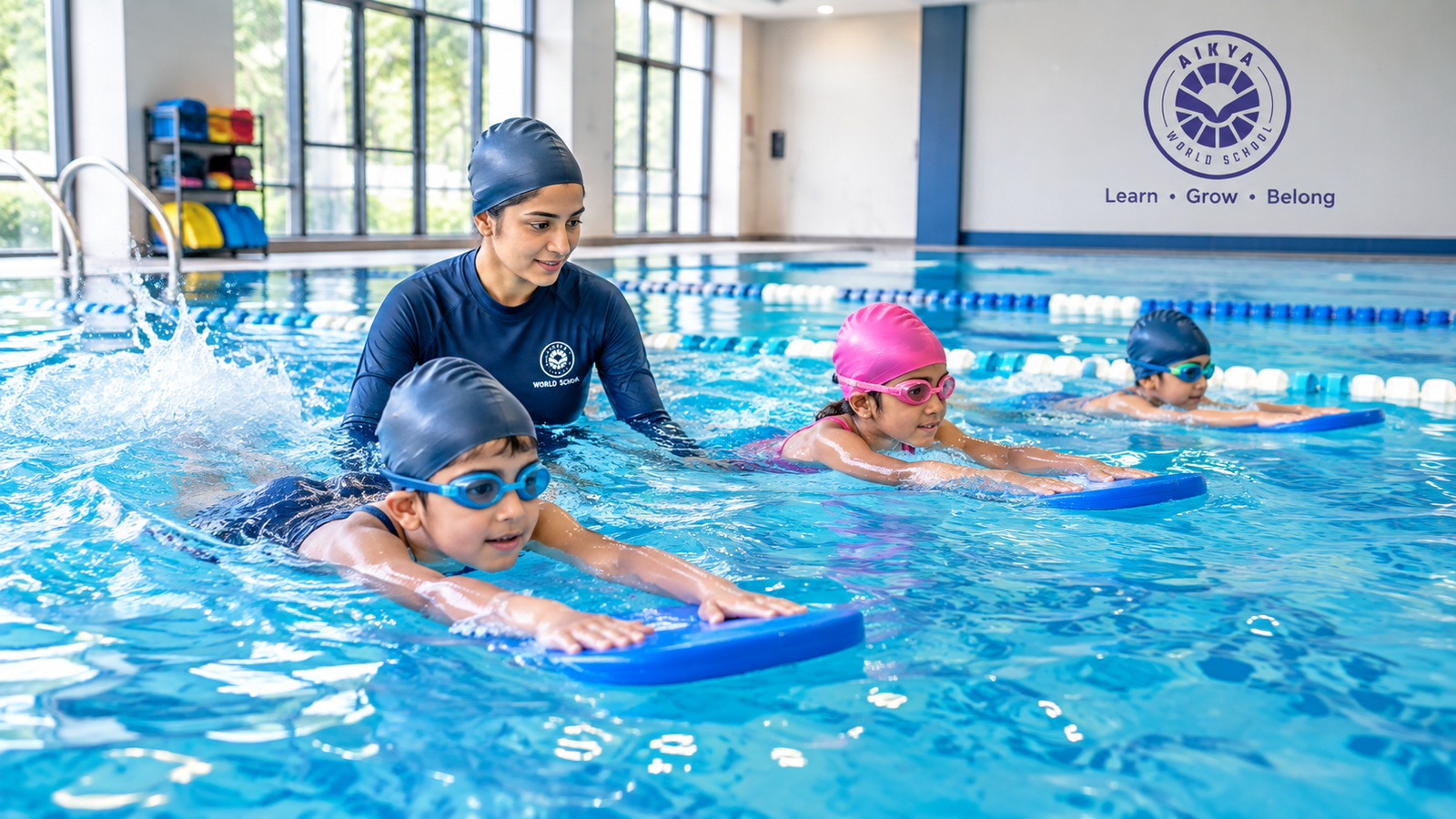
For parents, choosing a school is rarely just about marks and academics. You want your child to learn, but you also want them to become active, confident, independent and ready to handle challenges.
That is why the benefits of swimming for children deserve a closer look. Swimming is not only a sport or a recreational activity. With appropriate instruction and supervision, it can help children develop physical fitness, coordination, confidence, discipline and water-safety awareness.
As families consider schools admissions in bangalore 2026, sports facilities can be an important part of the overall school experience. A school that gives children opportunities to learn both inside and outside the classroom can help create a more balanced environment for growth.
So, what makes swimming in schools such a valuable activity for children?
Why Are the Benefits of Swimming for Children So Important?
Swimming combines physical movement with concentration, coordination and skill development. Children have to listen, remember instructions, control their movements and gradually improve their technique.
The American Academy of Pediatrics describes swimming as a valuable lifelong skill and recommends swim lessons as one layer of protection against drowning.
Swimming offers children several physical, emotional and developmental benefits. It can support fitness, endurance, coordination, confidence, focus, discipline and perseverance. Regular swimming can also introduce children to important water-safety skills and encourage an active lifestyle. When taught in a safe and supervised environment, swimming can become a valuable part of a child’s overall development.
Here are 10 important benefits parents should know.
1. Swimming Supports Physical Fitness
Swimming provides an active way for children to build endurance and muscular fitness. Because it involves coordinated movement of the arms, legs and core, it can become a valuable part of an active lifestyle.
The World Health Organization recommends that children and adolescents aged 5–17 get an average of at least 60 minutes of moderate-to-vigorous physical activity each day across the week. Swimming can be one way to contribute to that activity.
2. It Develops Coordination and Motor Skills
Swimming requires children to coordinate several movements at once kicking, pulling, breathing and maintaining body position.
Regular practice can therefore give children opportunities to develop balance, body awareness and movement control.
3. Swimming Can Build Confidence
Learning to swim does not happen overnight.
A child may initially hesitate to put their face in the water or try a new movement. Gradually mastering a skill can create a powerful sense of achievement.
That small moment of “I can do it!” can encourage children to approach other challenges with greater confidence.
4. It Encourages Perseverance
Swimming teaches children an important lesson: improvement takes practice.
A new stroke may take several attempts. Floating may feel difficult at first. Breathing techniques may need repeated practice.
Children learn that making progress is often about staying patient, accepting guidance and trying again.
5. Swimming Supports Focus and Concentration
During a swimming session, children need to listen carefully and remember instructions while coordinating their movements.
Physical activity more broadly is associated with benefits for children’s attention, memory and brain health. The CDC identifies improved attention and memory among the benefits of physical activity for children.
6. It Can Encourage Discipline and Goal-Setting
Swimming offers children visible milestones.
They may progress from becoming comfortable in the water to learning basic movements, improving technique and developing greater independence.
That progression can teach children to:
- Set achievable goals
- Practise consistently
- Listen to feedback
- Track their progress
- Stay patient when improvement takes time
7. Swimming Introduces Important Water-Safety Skills
Perhaps the most important reason for children to learn swimming is water safety.
Learning to swim can add a layer of protection, but parents should never treat swimming ability as a substitute for supervision. The AAP stresses that close, constant and attentive adult supervision remains essential around water.
Children should also learn basic pool rules and understand that water can be dangerous when approached carelessly.
8. It Can Encourage Social Skills
Swimming does not always have to be an individual experience.
When children participate in group lessons or school swimming sessions, they have opportunities to listen to instructors, take turns, interact with classmates and encourage one another.
These everyday interactions can help children become more comfortable participating in group activities.
9. Swimming Can Make Physical Activity Enjoyable
One of the biggest challenges parents face is getting children away from screens and into active routines.
Swimming can help because it combines exercise with enjoyment.
When children associate movement with something they genuinely enjoy, physical activity can feel less like a task and more like a natural part of their routine.
10. It Can Become a Lifelong Skill
Some childhood activities disappear as children grow older. Swimming can be different.
The basic life skills education can remain useful throughout life for recreation, fitness, travel and water safety.
The AAP notes that learning to swim can provide children with a lifelong source of fun and fitness.
What Does Swimming Have to Do With Holistic School Education?
A child’s education extends beyond textbooks.
The CBSE 2026–27 curriculum includes Physical Education & Well Being alongside academic subjects, reflecting the broader role of physical education within school education.
Learning Through Experience
Swimming gives children an opportunity to learn by doing.
They do not simply hear about discipline or perseverance they experience what those qualities look like when they practise a difficult skill.
Connecting Sports With Classroom Learning
Sports can complement academic learning by giving children opportunities to develop focus, cooperation, confidence and healthy routines.
That is why parents comparing schools should consider not only classrooms and curriculum, but also how a school creates opportunities for physical activity and overall development.
How Can a Temperature-Controlled Pool Enhance the School Experience?
For schools that offer swimming, the environment itself matters.
More Consistent Swimming Conditions
A temperature-controlled swimming pool allows water temperature to be regulated, creating more consistent conditions than relying entirely on changes in the surrounding environment.
A Dedicated Space for Learning
When swimming facilities are available within the school environment, students can experience swimming as part of their broader school life rather than only as an occasional outside activity.
The exact schedule, operating conditions and safety measures will depend on the school, but the facility can provide an additional opportunity for structured physical activity.
What Does Swimming Look Like at Aikya World School?
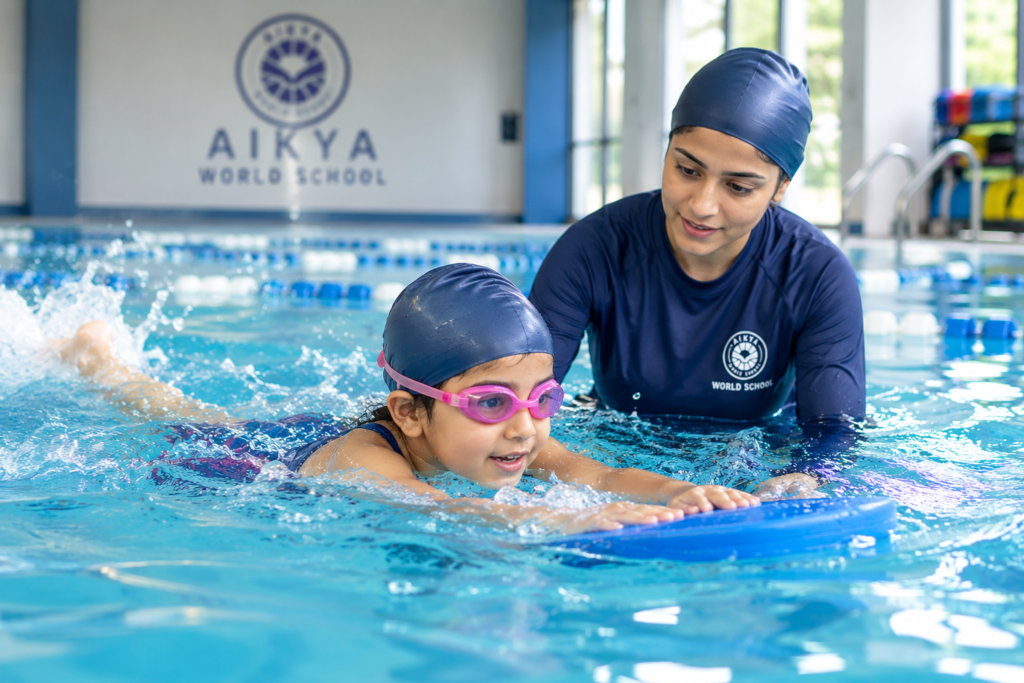
At Aikya World School, Bangalore, swimming is part of the school’s wider approach to sports and holistic development.
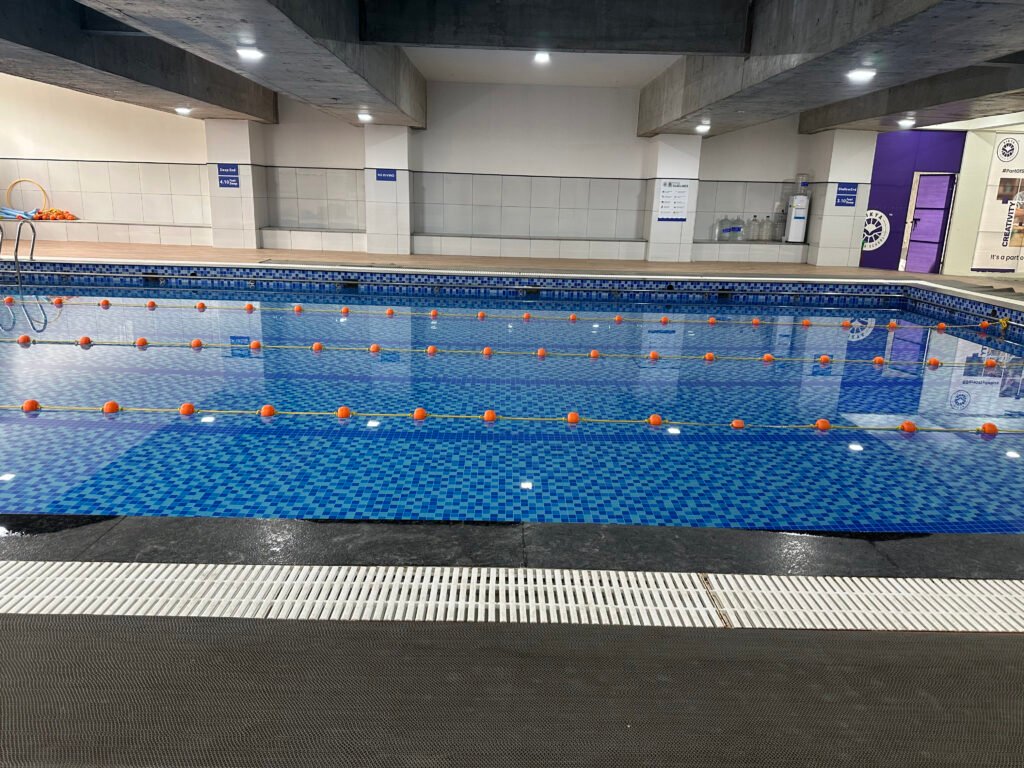
The school has a temperature-controlled swimming pool, providing students with a dedicated swimming facility within the school environment.
Swimming sits alongside other sports and co-curricular opportunities, giving children different ways to stay active, participate with peers and discover their interests.
More Than One Way to Learn
Aikya’s approach extends beyond conventional classroom learning, with opportunities for sports, co-curricular activities and hands-on experiences.
Swimming adds another practical setting where children can develop skills through participation.
Building Well-Rounded Learners
The aim is not to make every child a competitive swimmer.
Instead, sports can give children opportunities to become more active, practise discipline, build confidence and discover the satisfaction that comes from learning something new.
Give Your Child Opportunities to Grow Beyond the Classroom
Children do not develop through academics alone. They grow when they get opportunities to try, practise, make mistakes, improve and discover what they are capable of doing.
That is what makes swimming valuable.
From physical fitness and coordination to confidence, perseverance and water-safety awareness, the benefits of swimming for children can extend well beyond the pool.
At Aikya World School, swimming forms part of a broader approach to holistic education, alongside academics, sports, co-curricular activities and hands-on learning experiences.
If you are exploring schools in Bangalore for your child, consider the complete school experience not just what happens inside the classroom. Visit the Aikya campus, explore the facilities and speak with the admissions team to understand how your child can learn and grow at school.
For an admissions enquiry or to plan a campus visit, contact Aikya World School at 097399 49000.
Frequently Asked Questions
1. What are the main benefits of swimming for children?
The main benefits include physical fitness, coordination, endurance, confidence, focus, discipline, social interaction and water-safety awareness. Swimming can also encourage children to develop perseverance as they learn new skills.
2. Is swimming good for children’s physical fitness?
Yes. Swimming is a form of physical activity that can help children develop muscular fitness and endurance. WHO recommends an average of at least 60 minutes of moderate-to-vigorous physical activity daily for children aged 5–17 across the week.
3. Can swimming improve a child’s confidence?
Learning and mastering new swimming skills can give children a sense of achievement. The AAP notes that developing competence through swimming can contribute to self-confidence and perseverance.
4. Does swimming help children learn water safety?
Swimming lessons can teach important water competencies and safety behaviours and are one layer of drowning prevention. However, swimming ability does not remove the need for close adult supervision around water.
5. What should parents look for in swimming classes for children?
Parents should consider qualified instruction, appropriate supervision, safety procedures, pool maintenance, age-appropriate teaching and a programme that allows children to progress gradually.