
Introduction
Choosing a school is no longer only about asking, “Will my child score well in exams?” Parents are also thinking about confidence, communication, emotional well-being, creativity, physical health and the ability to handle an uncertain future.
This is where holistic education becomes important.
Children spend a significant part of their formative years in school. The experiences they have there can influence not only what they know, but also how they think, communicate, solve problems, respond to challenges and work with others.
But what does holistic education actually mean? Does it reduce academic focus? How do sports, STEM, arts and life skills fit into learning? And how can parents identify whether a school genuinely follows a holistic approach rather than simply using the term in its marketing?
This guide answers those questions and explains what holistic education means, why it matters, how schools implement it, and what parents should look for when choosing a school.
What Is Holistic Education?
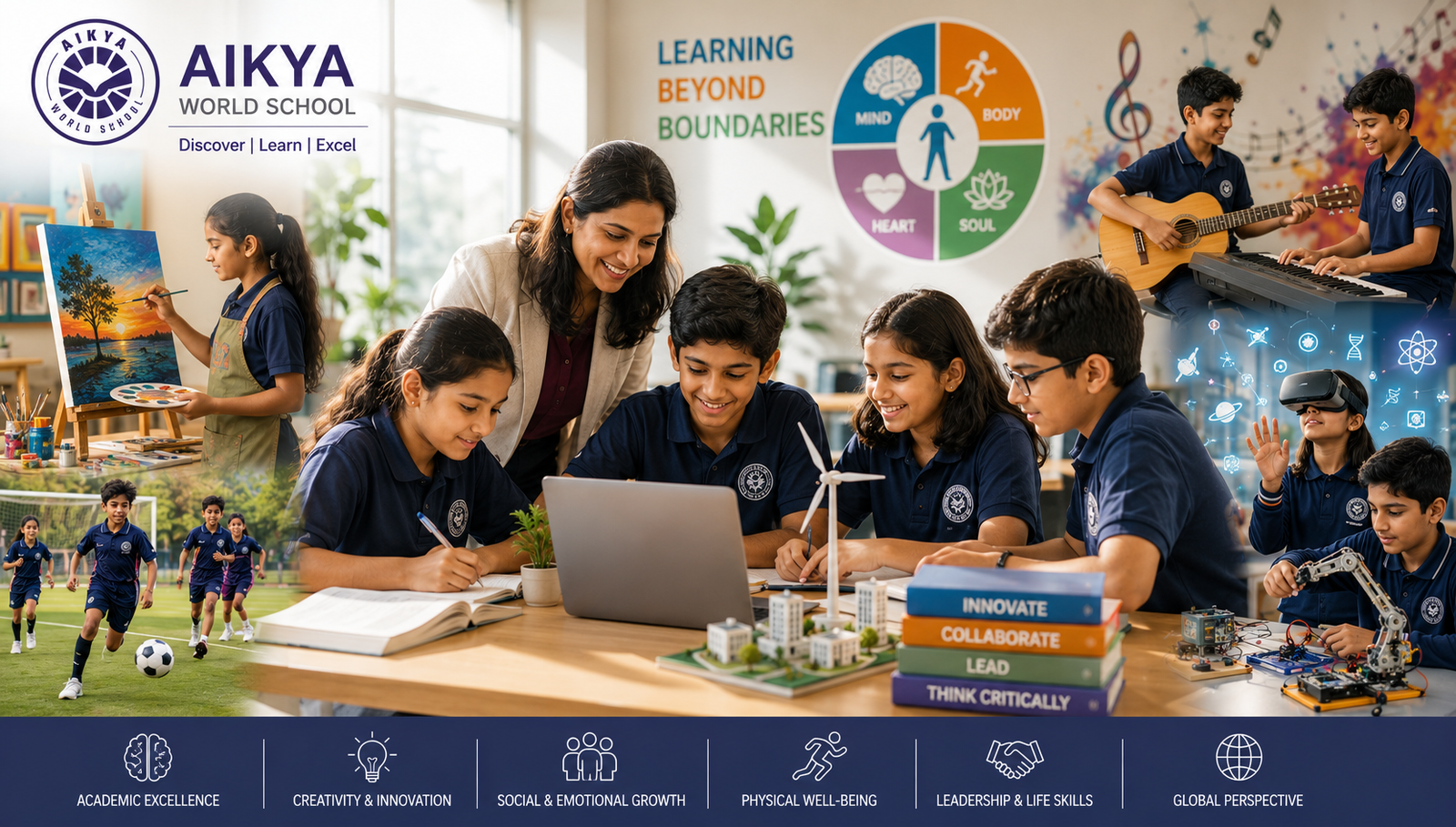
Holistic education is an approach that develops the whole child by combining academic learning with emotional, social, physical and personal development. It encourages students to think critically, communicate confidently, build relationships, stay physically active and develop practical skills alongside academic knowledge.
What Is Holistic Education?
Holistic education is an approach to learning that focuses on the development of the whole child, rather than academic performance alone.
It brings together different dimensions of development, including:
- Intellectual and cognitive growth
- Emotional development
- Social development
- Physical development
- Character development
- Creativity
- Communication
- Critical thinking
- Life skills
- Values and responsibility
What Does Holistic Education Mean in Simple Language?
Imagine a student learning about environmental pollution.
In a conventional lesson, the child might read the chapter, learn definitions and answer examination questions.
In a holistic learning environment, the same topic could involve:
- Understanding the science behind pollution.
- Researching local environmental issues.
- Working with classmates on a project.
- Creating solutions or models.
- Presenting findings.
- Discussing individual responsibility.
- Reflecting on how everyday choices affect the environment.
The academic knowledge remains important. However, the child also develops research, collaboration, communication, creativity and problem-solving skills.
That is the essence of holistic learning.
Holistic Education vs Traditional Education
The difference is not that one approach values academics and the other does not.
A better way to understand it is:
Traditional academic focus | Holistic education approach |
| Subject knowledge | Subject knowledge + application |
| Exam preparation | Learning + real-world application |
| Teacher-led instruction | Student participation |
| Individual academic tasks | Individual + collaborative learning |
| Textbook learning | Textbooks + experiences + project |
| Marks as a major outcome | Knowledge, skills and personal development |
Why Is Holistic Education Important for Students?
Children are preparing for a world that will continue to change.
The careers they eventually enter may look very different from today’s jobs. Technology, artificial intelligence, global collaboration and changing workplace expectations are increasing the importance of skills such as adaptability, communication, creativity and problem-solving.
India’s National Education Policy 2020 explicitly emphasizes moving towards deeper understanding and learning how to learn, while developing character and well-rounded individuals with 21st-century skills.
Preparing Children for Life Beyond the Classroom
School should prepare children for more than examinations.
Students eventually need to:
- Make decisions independently
- Communicate with different people
- Manage responsibilities
- Handle failure
- Solve unfamiliar problems
- Work in teams
- Adapt to change
- Continue learning throughout life
These abilities develop through experiences, not simply through memorizing information.
Building Confidence and Independence
Confidence grows when children are given opportunities to make decisions and see the results of their efforts.
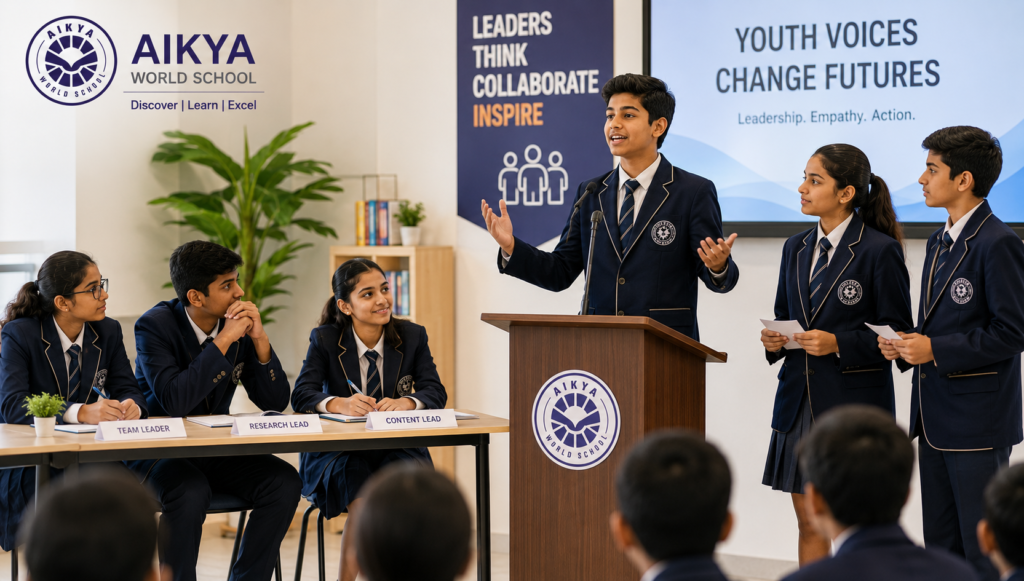
A student who presents a project, participates in a debate, leads a team activity or performs on stage experiences situations that require preparation and courage.
Over time, these experiences can help students become more comfortable expressing ideas and taking responsibility.
Supporting Emotional and Social Well-Being
Academic achievement is important, but children also need environments where they can develop healthy relationships and understand their emotions.
UNESCO describes social and emotional learning as supporting students in recognizing and managing emotions, building relationships, making responsible decisions and handling challenging situations.
Holistic education creates space for these abilities to develop alongside academic learning.
Holistic education can provide opportunities to practise these skills while students are still in school.
What Are the Benefits of Holistic Education?
The benefits of holistic education extend beyond the classroom because students develop academic abilities alongside personal and interpersonal skills.
1. Stronger Academic Understanding
Students can connect concepts with real-world situations instead of learning them only for examinations.
2. Critical Thinking
Projects, discussions and inquiry encourage students to ask questions, examine evidence and consider different solutions.
3. Creativity
Arts, STEM activities, projects and open-ended challenges give children opportunities to create rather than simply reproduce information.
4. Better Communication
Presentations, debates, group activities and collaborative projects help students express their thoughts clearly.
5. Emotional Intelligence
Students learn to recognize emotions, respond appropriately and understand different perspectives.
6. Confidence
Performances, sports, presentations and leadership opportunities provide practical situations where children can build confidence.
7. Leadership
Leadership does not have to begin with becoming a school captain.
It can start with:
- Taking responsibility for a group
- Organizing a project
- Helping classmates
- Making decisions
- Leading an activity
8. Teamwork
Group projects and sports teach students how to listen, cooperate, negotiate and work towards a shared goal.
9. Physical Development
Benefits of Sports and physical education support fitness, coordination, movement and healthy habits.
10. Resilience
Children inevitably experience mistakes and setbacks.
Holistic education can give students safe opportunities to experience failure, reflect on it and try again.
How Does Holistic Education Support Academic Excellence?
One of the biggest concerns parents have is:
“If a school focuses on holistic development, will academics suffer?”
Does Holistic Education Reduce Academic Focus?
No.
Holistic education should not mean reducing academic standards. Instead, it can complement academic learning by giving students more ways to understand and apply what they learn.
CBSE’s competency-based education approach places emphasis on learning outcomes, real-world application, active student participation, feedback and problem-solving.
This creates an important connection between academic learning and practical learning.
How Holistic Learning Improves Critical Thinking
Instead of asking only:
“What is the correct answer?”
students can also be encouraged to ask:
- Why is this the answer?
- What evidence supports it?
- Is there another solution?
- Where could this concept be applied?
- What happens if one factor changes?
These questions encourage deeper thinking.
How Experiential Learning Connects Lessons to Real Life
A child may understand a mathematical formula on paper.
But applying that formula while designing a model, analysing data or solving a practical problem creates another layer of understanding.
This is why experiential learning, project-based learning and inquiry-based learning can complement classroom instruction.
What Role Do Sports Play in Holistic Education?
Sports are much more than physical exercise.
A student playing basketball, football, athletics or another sport may simultaneously practise:
- Teamwork
- Discipline
- Communication
- Leadership
- Decision-making
- Resilience
- Sportsmanship
- Goal-setting
Sports also provide children with opportunities to experience both winning and losing.
That experience matters.
A student learns that improvement requires practice, mistakes are part of learning and success often depends on consistent effort.
Therefore, physical education should not be treated as an optional extra in a child’s development.
What Role Do Co-Curricular Activities Play in Holistic Education?
Co-curricular activities give children opportunities to discover interests that may not emerge through textbooks alone.
These may include:
- Music
- Dance
- Drama
- Art
- Public speaking
- Debates
- Clubs
- Competitions
- Cultural activities
- Creative writing
- Student leadership programmes
A child who struggles to speak during a classroom lesson may become confident while performing on stage.
Another student may discover an interest in design through art.
Someone else may develop leadership skills while organizing a club activity.
The important point is that different children show their strengths in different ways.
Holistic education gives those strengths room to emerge.
How Does STEM Education Support Holistic Development?
STEM education combines:
- Science
- Technology
- Engineering
- Mathematics
However, effective STEM education is not simply about using technology.
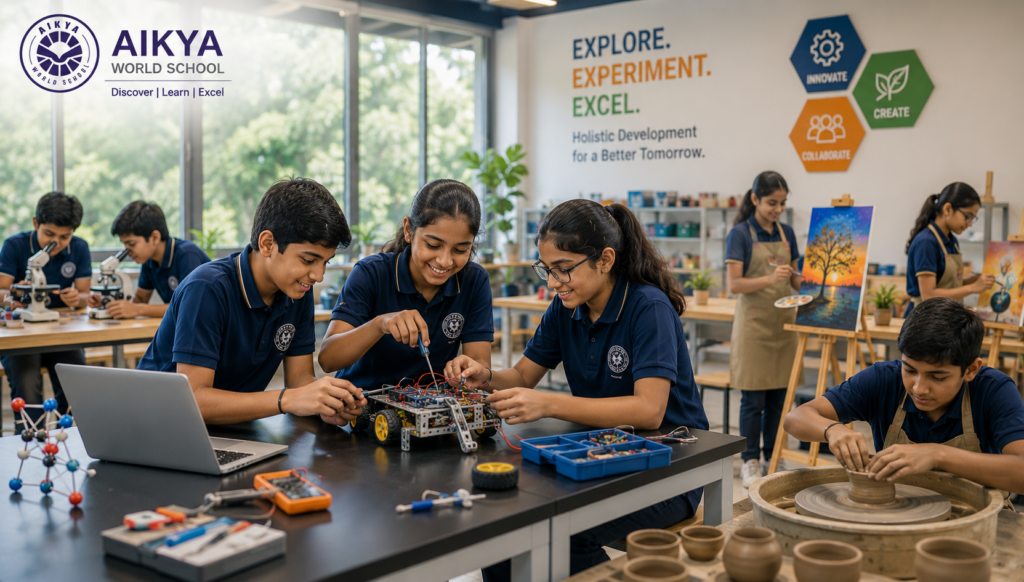
It is about asking questions, testing ideas, solving problems and creating solutions.
For example, students designing a water filtration model may need to:
- Understand scientific principles.
- Calculate measurements.
- Design a solution.
- Build and test it.
- Identify what went wrong.
- Modify the design.
- Present the final result.
This combines academic knowledge with creativity, collaboration and problem-solving.
CBSE has promoted experiential learning and competency-based education initiatives, including teacher training and programmes focused on thinking and real-world learning.
This makes STEM a natural part of a future-ready education approach.
How Does Holistic Education Develop Life Skills?
Children need skills that textbooks cannot teach completely.
Life skills education can help students develop abilities such as:
- Communication
- Decision-making
- Problem-solving
- Time management
- Teamwork
- Leadership
- Adaptability
- Self-awareness
- Responsible decision-making
For example, a group project may teach time management because students have to divide responsibilities and meet deadlines.
A student council activity can teach communication and decision-making.
A sports team can teach discipline and teamwork.
A classroom discussion can teach students how to disagree respectfully.
The key is that these skills are developed through repeated practice in real situations.
What Is the Role of Teachers in Holistic Education?
Teachers play a central role in making holistic education meaningful.
A teacher is not simply someone who delivers information.
In a student-centered environment, the teacher can also act as a:
- Mentor
- Guide
- Facilitator
- Observer
- Feedback provider
- Encourager
- List
How Can Schools Implement Holistic Education?
A genuine holistic education in schools should be visible in everyday school life rather than limited to occasional events.
Holistic Learning Inside the Classroom
Schools can integrate holistic learning through:
- Discussions
- Projects
- Inquiry
- Collaborative tasks
- Experiments
- Presentations
- Problem-solving activities
- Interdisciplinary learning
For example, a lesson on water conservation could combine science, mathematics, geography, communication and civic responsibility.
Holistic Learning Beyond the Classroom
Development also happens outside regular lessons through:
- Sports
- Arts
- Clubs
- Field trips
- Community projects
- Leadership activities
- Competitions
- Cultural programmes
These experiences give students opportunities to apply what they learn.
Creating a Student-Centered Learning Environment
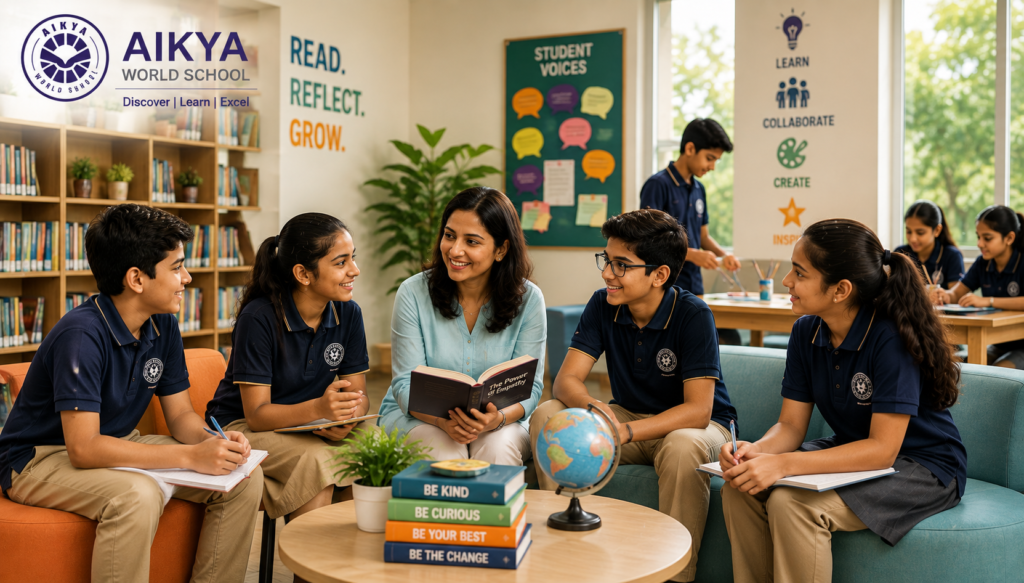
A student-centered school encourages children to participate actively.
Instead of always providing answers, teachers can encourage students to:
- Ask questions
- Explore
- Research
- Discuss
- Create
- Reflect
- Present their thinking
This creates a learning environment where curiosity becomes part of the process.
Holistic Education Statistics and Research
Holistic education is not simply a trend. Several major educational and health organizations highlight the importance of development beyond narrow academic measures.
1. WHO: Physical Activity
WHO recommends at least 60 minutes of moderate-to-vigorous physical activity each day for children aged 5–17. It also recommends muscle- and bone-strengthening activities at least three times per week.
Why it matters: Schools have an important role in creating opportunities for students to stay physically active.
2. OECD: Social and Emotional Skills
The OECD’s 2023 Survey of Social and Emotional Skills found relationships between social and emotional skills and academic success, well-being and future aspirations.
Why it matters: Skills such as persistence, curiosity, emotional control and responsibility are relevant to both learning and life.
3. UNESCO: Global Education Access
UNESCO’s recent Global Education Monitoring data reports that 251 million children and youth remained out of school globally, while millions more have entered education since 2015.
Why it matters: Quality education is not simply about access; the quality and breadth of what children experience in education also matter.
4. India’s NEP 2020
India’s National Education Policy 2020 places holistic development, character development, 21st-century skills and learning beyond rote memorization among its education goals.
Parent takeaway: Holistic education aligns with a broader direction in modern education policy: helping children become capable, confident and well-rounded learners.
How Does Holistic Education Prepare Students for the Future?
The future is difficult to predict.
Children entering school today may eventually work in roles that are still evolving.
Artificial intelligence, automation, global collaboration and rapid technological change mean students need the ability to learn, adapt and solve unfamiliar problems.
Holistic education can support this through:
Adaptability
Students learn to respond to new situations instead of relying only on familiar answers.
Creativity
Creative thinking helps children approach problems from different perspectives.
Communication
Future professionals will need to explain ideas clearly to people with different backgrounds and expertise.
Collaboration
Many modern problems require teams rather than individuals working alone.
Leadership
Students need opportunities to take responsibility, make decisions and support others.
What Should Parents Look for in a Holistic School?
Parents should look beyond brochures and advertisements.
A school may describe itself as holistic, but parents should ask:
“What does this look like in a normal school week?”
Parent Checklist for Choosing a Holistic School
- Strong academics
Does the school maintain clear academic standards? - Student-centered teaching
Are students encouraged to participate, question and explore? - Experienced teachers
Do teachers provide mentoring and individual feedback? - Sports opportunities
Are sports treated as an important part of student development? - Arts and cultural activities
Can children explore music, dance, drama and creative arts? - STEM/STEAM opportunities
Do students get hands-on opportunities to experiment and build? - Life skills
Does the school intentionally develop communication, decision-making and other practical skills? - Leadership opportunities
Can students take meaningful responsibilities? - Student well-being
Does the school create a supportive environment for emotional and social development? - Experiential learning
Do students learn through projects, experiments and real-world experiences?
Holistic Education in CBSE Schools
Holistic education can work particularly well alongside a modern CBSE learning environment.
CBSE’s stated academic vision includes holistic education, intellectual, social and cultural development, while its competency-based education approach emphasizes active learning, real-world application and student-centered experiences.
A CBSE school can support holistic development through:
- Competency-based learning
- Experiential learning
- Interdisciplinary projects
- STEM education
- Sports
- Arts
- Life skills
- Co-curricular activities
- Leadership opportunities
- Project work
- Collaborative learning
For parents comparing the best CBSE schools in Bangalore, this distinction is important.
The question should not simply be:
“Is the school CBSE?”
It should also be:
“How does the school bring the curriculum to life?”
Parents looking for the best CBSE school for holistic development should examine the balance between academics, experiential learning, student well-being, sports, technology, creativity and practical skill development.
Conclusion
Why Holistic Education Matters for Your Child’s Future
So, what is holistic education?
At its heart, it is about seeing a child as more than a report card.
Academic knowledge remains essential. But children also need confidence to express themselves, resilience when things do not go as planned, curiosity to keep learning, discipline to work towards goals, empathy to understand others and practical skills to navigate life. That is why the strongest form of education does not force parents to choose between academic excellence and holistic development.
It aims to build both.
At Aikya World School, parents can explore an approach that brings together academics, experiential learning, co-curricular activities, sports, STEAM learning and opportunities for broader student development.
Ready to Explore the Right Learning Environment?
Book a Campus Visit → Speak to the Admissions Team → Submit an Enquiry
A campus visit can help you see the learning environment, interact with the school and make a more informed decision about your child’s educational journey.
Frequently Asked Questions
1. What is holistic education and why is it important for students?
Holistic education develops the whole child by combining academic learning with emotional, social, physical and personal development. It is important because students need more than subject knowledge to navigate relationships, challenges, future careers and everyday responsibilities.
2. What are the main benefits of holistic education for children?
The benefits of holistic education include stronger communication, critical thinking, creativity, confidence, teamwork, leadership, resilience and physical well-being. It also provides opportunities for students to connect academic concepts with practical experiences.
3. How does holistic education differ from traditional education?
Traditional education often places strong emphasis on subject knowledge and academic outcomes. Holistic education retains academic learning while adding emotional, social, physical, creative and practical development. The two approaches do not have to be opposites; strong schools can combine academic rigour with broader student development.
4. Does holistic education improve academic performance?
Holistic education does not automatically guarantee higher marks, but approaches such as experiential learning, inquiry, collaboration and competency-based learning can support deeper understanding.
5.How do CBSE schools support holistic education?
CBSE schools can support holistic education through competency-based learning, experiential activities, projects, sports, arts, STEM, life skills and student-centered teaching. CBSE’s academic resources explicitly promote approaches that emphasize active learning, real-world application and holistic development.