
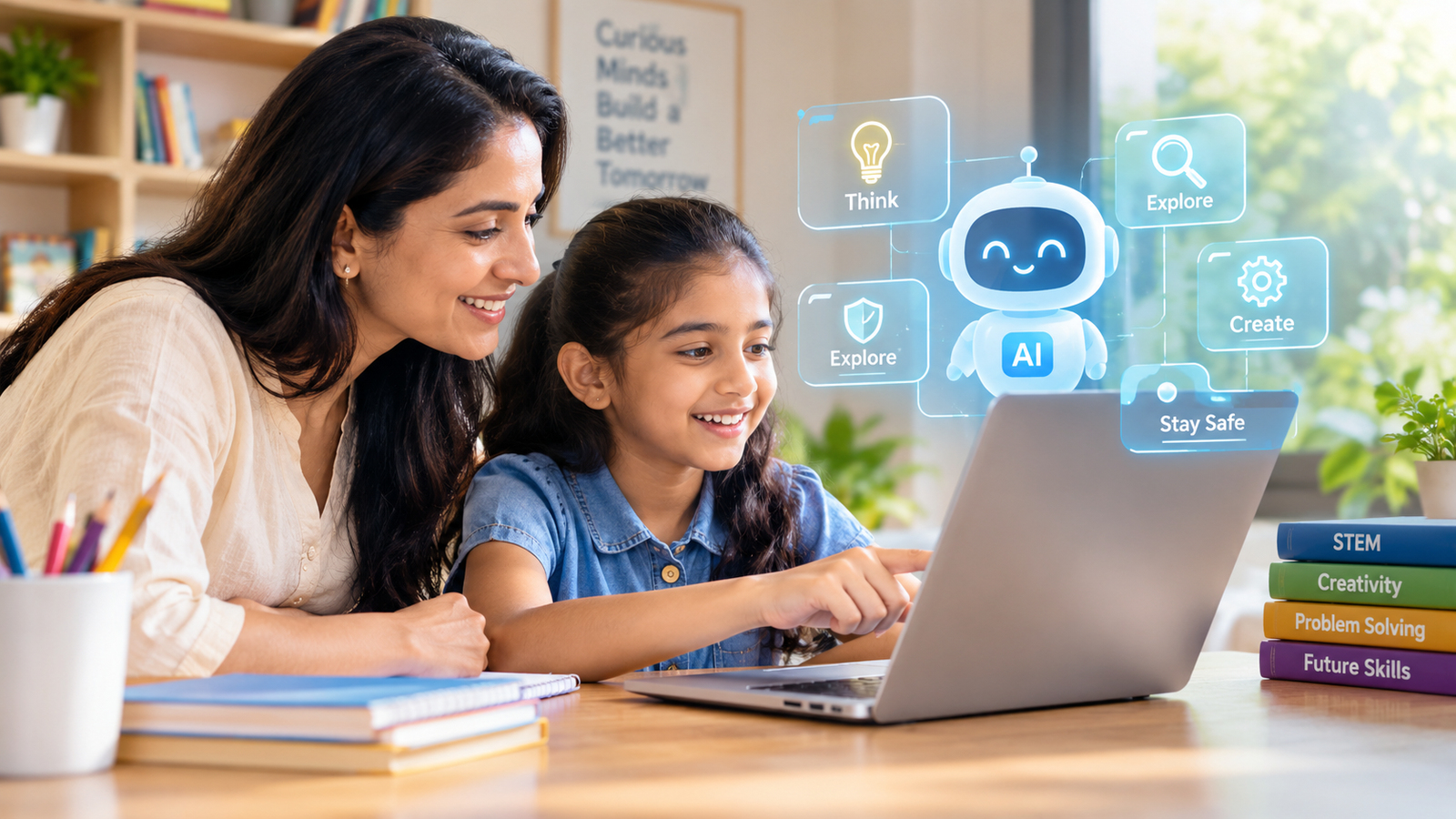
Artificial intelligence is becoming part of everyday life, and children are encountering it earlier than many parents might expect. From voice assistants and recommendation systems to educational applications and AI chatbots, these technologies are changing how children find information, learn and interact with the digital world.
The answer lies in helping children understand AI and develop the judgement to use it responsibly. They need more than the ability to operate digital tools. They need critical thinking, creativity, problem-solving, digital safety awareness and the confidence to question information rather than accept every answer they receive.
Here are ten essential skills that can help children navigate a world where artificial intelligence is becoming increasingly common.
How Is Artificial Intelligence Changing Children’s Lives?
Artificial intelligence is technology that enables computer systems to perform tasks that usually require human-like abilities, such as recognising patterns, understanding language, making predictions and generating content.
Children may encounter AI through search engines, video recommendations, translation applications, voice assistants, educational platforms and generative AI tools.
These technologies can make information and learning resources easier to access. However, they also introduce challenges. AI-generated answers may contain mistakes, reflect biases or present information confidently even when it is inaccurate.
What Is AI Literacy for Children?
AI literacy means understanding what artificial intelligence is, how it works at a basic level, where it can be useful and what limitations or risks children should recognise.
An AI-literate child should gradually learn to:
- Recognise where AI is used in everyday life.
- Understand that AI systems work with data and patterns.
- Question information generated by AI tools.
- Protect personal information when using digital platforms.
- Recognise the importance of fairness, privacy and responsible use.
- Use technology to support learning without becoming dependent on it.
Children do not need to become programmers to develop AI literacy. The first step is understanding how these technologies influence the information they see and the choices they make.
10 Essential Skills Children Need in the Age of AI
1. Critical Thinking
AI tools can generate answers quickly, but speed does not guarantee accuracy. Children need to learn how to question information, examine evidence and identify possible mistakes.
For example, if an AI tool provides an answer to a school assignment, children should be encouraged to ask:
- Does this answer make sense?
- Can I find the same information in a reliable source?
- Is there evidence to support this statement?
- Could the answer be incomplete or incorrect?
2. AI Literacy
Children should gradually understand what AI can do and what it cannot do.
They can begin with familiar examples, such as voice assistants, recommendation systems and tools that recognise images or translate languages.
As they grow older, they can explore how generative AI creates text, images and other content using patterns learned from data.
3. Creativity and Original Thinking
Artificial intelligence can generate stories, pictures, music and ideas. However, children still need opportunities to develop their own imagination and express original thoughts.
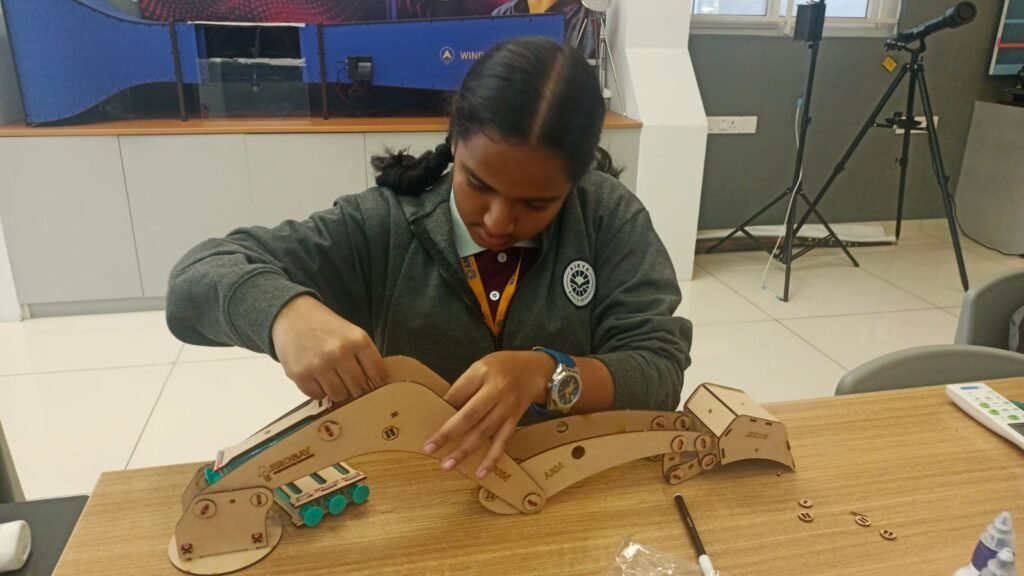
Encourage children to draw, write stories, create models, perform music, participate in drama and explore hands-on projects without immediately turning to an AI tool.
4. Problem-Solving and Computational Thinking
Problem-solving involves identifying a challenge, exploring possible solutions and evaluating what works. Computational thinking adds a structured approach to this process by encouraging children to break problems into smaller parts, recognise patterns and develop logical steps.
For example, a child planning how to organise a class project may need to divide the work into smaller tasks, decide what should happen first and identify the materials required.
Puzzles, mathematics activities, experiments, games and hands-on projects can provide opportunities to practise these abilities.
5. Digital Safety and Privacy Awareness
Children need to understand that information shared online may not always remain private.
Before using AI tools, they should learn not to share sensitive information such as:
- Home addresses and phone numbers.
- Passwords and login details.
- Personal photographs.
- School and family details.
- Private conversations or confidential information.
6. Ethical Thinking and Responsible AI Use
Children should understand that technology should be used fairly and responsibly.
For example, using AI to understand a difficult concept is different from submitting an AI-generated assignment as entirely their own work.hildren should understand that technology affects real people.
Children should gradually learn to consider questions such as:
- Is it fair to use AI in this situation?
- Am I presenting someone else’s work as my own?
- Could the information be harmful or misleading?
7. Communication
Technology can help children access information, but it cannot replace the value of human interaction.
Children still need to express ideas clearly, listen to others, ask questions, participate in discussions and work together.
Group projects, sports, music, drama and classroom discussions provide opportunities to practise these skills.
8. Independent Learning
One concern about AI is that children may begin relying on it whenever they encounter a difficult question.
If a child asks an AI tool to solve every mathematics problem or write every assignment, they may miss the opportunity to develop their own understanding.
Encourage children to attempt a task independently before seeking technological assistance.
AI can then be used to explain a difficult concept, offer practice questions or compare possible approaches. The child should still be able to explain the final answer in their own words.
9. Adaptability and Curiosity
Artificial intelligence and other technologies will continue to change. It is therefore difficult to predict which specific tools children will need to use in the future.
Rather than focusing only on individual applications, encourage children to remain curious, explore unfamiliar ideas and become comfortable learning new things.
10. Human Skills and Emotional Intelligence
As technology becomes more capable, qualities such as empathy, patience, kindness, emotional awareness and sound judgement remain essential.
Children need to understand how their words and actions affect others. They should also learn to manage disagreements, respect different viewpoints and build meaningful relationships.
These human qualities help children use technology wisely rather than become dependent on it.
How Can Parents Introduce AI at Home?
Parents do not need to be technology experts to help children understand artificial intelligence. A few simple practices can create a good starting point.
1. Begin with familiar examples: Explain AI using everyday technologies children may already encounter, such as voice assistants or video recommendations.
2. Explore together: If an age-appropriate AI tool is being used, examine its response together. Discuss what seems useful and what may need checking.
3. Encourage questions: Ask children what they think AI can do, where it might make mistakes and how they could verify an answer.
4. Establish clear boundaries: Set rules about which tools children may use, when they may use them and what information they must never share.
5. Protect independent learning: Encourage children to attempt their own work before using AI for explanations or support.
How Can Schools Prepare Children for an AI-Driven World?
Schools have an important role in helping students understand technology while developing the human skills needed to use it responsibly.
AI education should not be limited to learning how to operate a particular application. Students also need opportunities to develop logical reasoning, critical thinking, creativity, collaboration and ethical awareness.
India’s CBSE Computational Thinking and Artificial Intelligence curriculum for Classes III–VIII, introduced for the 2026–27 academic session, reflects the growing importance of these abilities in school education.
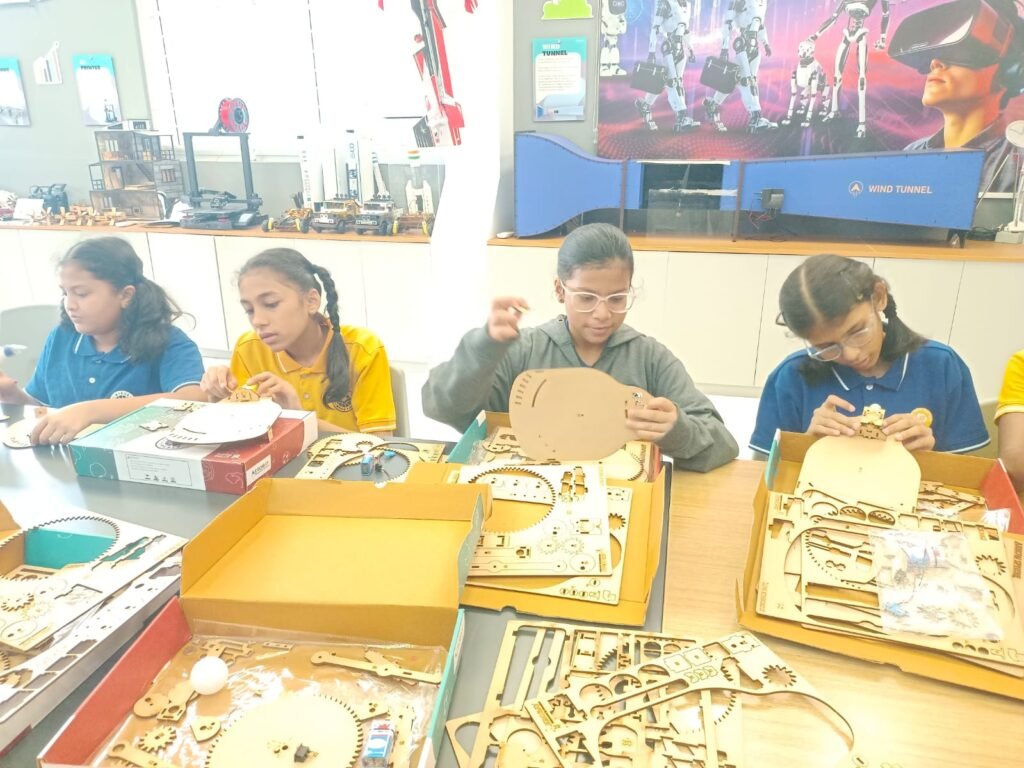
At Aikya World School, Jayanagar, the published learning approach emphasises conceptual understanding, experiential learning, hands-on projects and STEAM-focused experiences. The curriculum also highlights critical thinking, creativity, collaboration and real-world applications.
Helping Children Grow Alongside Technology
Artificial intelligence will continue to influence how children learn, communicate and access information. Preparing them for this changing environment does not mean introducing every new tool as soon as it becomes available.
It means helping them understand technology, recognise its limitations and make responsible choices.
Children who can think critically, solve problems, express ideas, protect their privacy and show empathy will be better equipped to navigate an AI-influenced world.
For parents and schools, the goal should be to ensure that technology supports children’s development without taking away the curiosity, creativity and human connections that make learning meaningful.
FAQs
What is AI literacy for children?
AI literacy means understanding what artificial intelligence is, how it works at a basic level, where it can be useful and what risks or limitations children should recognise.
At what age should parents teach children about AI?
There is no single starting age. UNICEF guidance notes that parents can begin age-appropriate conversations quite young, particularly because children already encounter AI in everyday technologies.
Is AI safe for children?
AI can provide useful learning opportunities, but risks include privacy concerns, inaccurate information, inappropriate content and overdependence. Age-appropriate supervision and clear boundaries are important.
Should children use AI for homework?
AI can support learning when used appropriately, but children should still attempt to understand and complete their work themselves rather than simply submitting AI-generated answers.
What are the most important AI skills for students?
Critical thinking, AI literacy, creativity, problem-solving, digital safety, ethical reasoning, communication and adaptability are among the important skills.
How can parents teach responsible AI use?
Explore AI together, establish privacy and usage rules, encourage fact-checking and make sure technology complements rather than replaces reading, thinking, conversation and hands-on learning.