
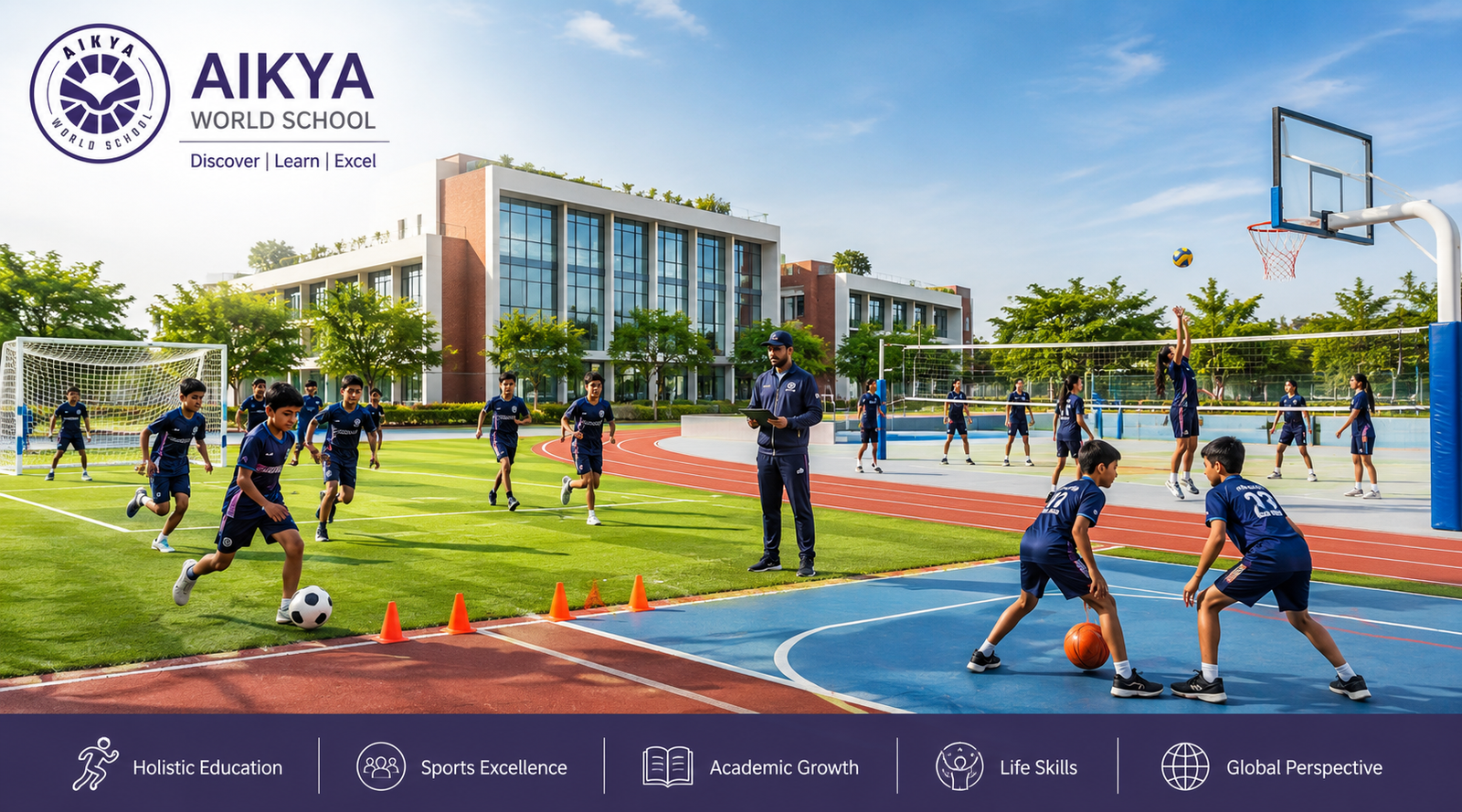
Every parent wants their child to grow into a confident, healthy, and successful individual. While academics remain an important part of education, today’s children also need opportunities to develop teamwork, discipline, and emotional strength. Unfortunately, increasing screen time and academic pressure often leave little room for physical activity.
The benefits of sports for students extend far beyond winning medals or staying physically active. Sports teach valuable life lessons, improve mental well-being, encourage leadership, and help children develop skills that prepare them for lifelong success. Schools that combine academics with sports create an environment where children can thrive both inside and outside the classroom.
In this article, let’s understand why sports are an essential part of a child’s education, how they contribute to academic achievement, character development, and lifelong well-being. Choosing a school that values sports alongside academics can make a meaningful difference in a child’s overall development and future success.
What Are the Benefits of Sports for Students?
Sports help students improve physical fitness, mental health, confidence, teamwork, discipline, leadership, and academic performance. Regular participation in school sports also develops communication skills, emotional resilience, problem-solving abilities, and healthy lifestyle habits, preparing children for success both in school and later in life.
What Does Research Say About Sports and Students?
WHO recommends that children and adolescents aged 5–17 get an average of at least 60 minutes of moderate-to-vigorous physical activity every day across the week. Activities should include mostly aerobic movement, with muscle- and bone-strengthening activities incorporated at least three days a week.
Source: WHO Physical Activity Guidelines.
A 2025 systematic review and meta-analysis of 17 studies found that school-based physical activity was associated with improvements in mathematics and overall academic achievement. The researchers reported a small positive effect on mathematics and overall academic performance, while also noting variation between studies.
The study was published in Frontiers in Public Health in September 2025 and included 17 studies. It reported an effect size of 0.11 for mathematics and 0.22 for overall academic achievement, while noting substantial variation between studies
Why Are Sports Important in a Student’s Life?
Sports are an essential part of holistic education because they support children’s physical, emotional, social, and intellectual development. They encourage students to step outside their comfort zones, learn from challenges, and celebrate achievements with others.
Instead of viewing sports as separate from academics, schools should see them as an extension of learning.
Physical Development
Physical activity strengthens growing bodies.
Children who participate regularly in sports are more likely to:
- Develop stronger muscles and bones
- Improve flexibility and coordination
- Maintain a healthy weight
- Build cardiovascular endurance
- Develop lifelong healthy habits
Regular movement during childhood lays the foundation for healthier adulthood.
Mental Well-being
Sports have a positive impact on emotional health.
Regular exercise helps students:
- Reduce stress
- Manage anxiety
- Improve mood
- Increase focus
- Sleep better
Children who enjoy physical activity often become happier, calmer, and more motivated learners.
Confidence Building
Confidence grows through experience.
Sports encourage students to:
- Try new challenges
- Learn from mistakes
- Celebrate progress
- Speak confidently
- Trust their abilities
Winning builds confidence, but overcoming setbacks builds resilience a quality that benefits children throughout life.
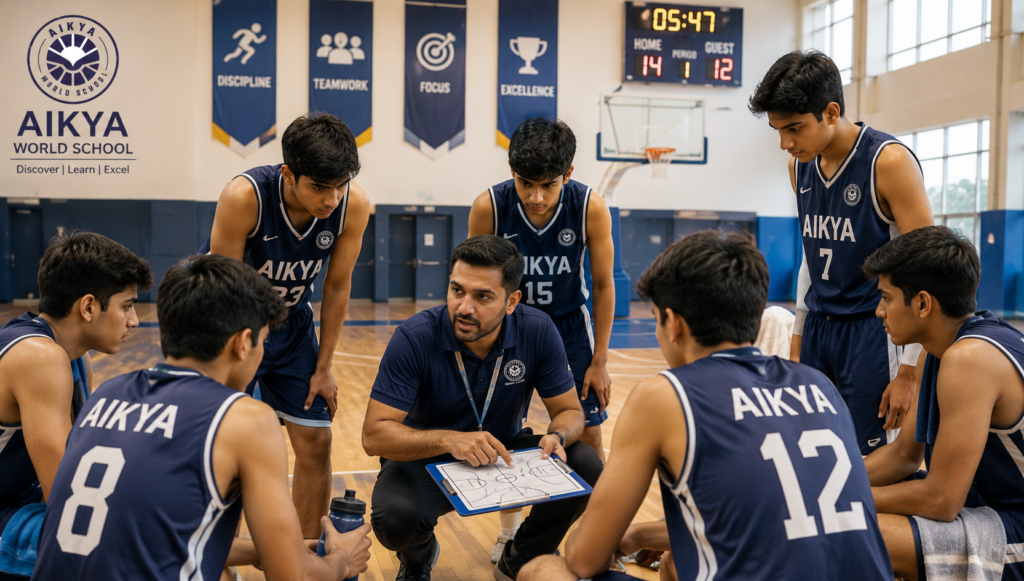
Benefits of Sports for Students
The benefits of sports for students go far beyond physical fitness. They influence every aspect of child development.
1. Improves Physical Health
Sports encourage active lifestyles and reduce sedentary habits.
Children develop:
- Better stamina
- Stronger immunity
- Healthy posture
- Greater flexibility
2. Enhances Mental Health
Physical activity releases endorphins, helping students feel happier and more relaxed.
Sports can also reduce:
- Exam stress
- Anxiety
- Emotional fatigue
3. Develops Discipline
Following practice schedules, respecting coaches, and working toward goals teaches students valuable discipline that benefits both academics and personal life.
4. Builds Leadership Skills
Sports naturally create leadership opportunities.
Students learn to:
- Motivate teammates
- Make decisions
- Accept responsibility
- Solve problems under pressure
Leadership learned on the playground often translates into leadership in the classroom and beyond.
5. Encourages Teamwork
Most school sports require collaboration.
Students understand:
- Cooperation
- Shared responsibility
- Respect for others
- Collective success
These qualities are highly valued in higher education and future workplaces.
6. Improves Time Management
Balancing academics, sports, and personal responsibilities teaches students how to prioritize tasks effectively.
Time management becomes a lifelong skill.
7. Promotes Emotional Resilience
Not every game ends in victory.
Sports teach children how to:
- Accept failure gracefully
- Learn from mistakes
- Stay motivated
- Persevere through challenges
These experiences build emotional maturity.
8. Strengthens Decision-Making Skills
Whether choosing a strategy during a football match or deciding how to support teammates, sports encourage quick thinking and informed decision-making.
9. Encourages Healthy Competition
Healthy competition motivates students to improve while respecting others’ achievements.
It nurtures sportsmanship rather than unhealthy comparison.
10. Supports Holistic Development
One of the greatest benefits of sports is that they develop the whole child.
Sports contribute to:
- Academic success
- Physical fitness
- Emotional intelligence
- Social skills
- Leadership
- Confidence
Together, these qualities prepare students for lifelong success.
How Do Sports Help in Developing Social Skills?
While academics help students gain knowledge, sports teach them how to interact, collaborate, and build meaningful relationships. Whether playing cricket, football, basketball, or participating in athletics, children learn valuable social skills that prepare them for life beyond the classroom.
Teamwork
Every successful team relies on cooperation rather than individual performance.
Through sports, students learn to:
- Work towards a common goal
- Respect teammates’ strengths
- Support one another during challenges
- Celebrate success together
These experiences help children become better collaborators both in school and in future workplaces.
Communication Skills
Effective communication is essential during every game.
Students naturally develop the ability to:
- Express ideas clearly
- Listen carefully
- Encourage teammates
- Give and receive constructive feedback
Strong communication skills also improve classroom participation and self-confidence.
Empathy and Respect
Winning teaches confidence, while losing teaches humility.
Sports encourage children to:
- Respect opponents
- Appreciate different perspectives
- Accept diverse abilities
- Show kindness during competition
These qualities contribute to emotional intelligence and healthy relationships.
Leadership
Sports provide natural opportunities for leadership.
Students often:
- Lead warm-up sessions
- Guide teammates
- Motivate others during difficult moments
- Make strategic decisions
These experiences help children become responsible leaders in school and beyond.
Conflict Resolution
Disagreements are part of every game.
Sports teach students how to:
- Stay calm
- Solve disagreements respectfully
- Negotiate fairly
- Focus on solutions instead of blame
Learning these skills early benefits children throughout life.
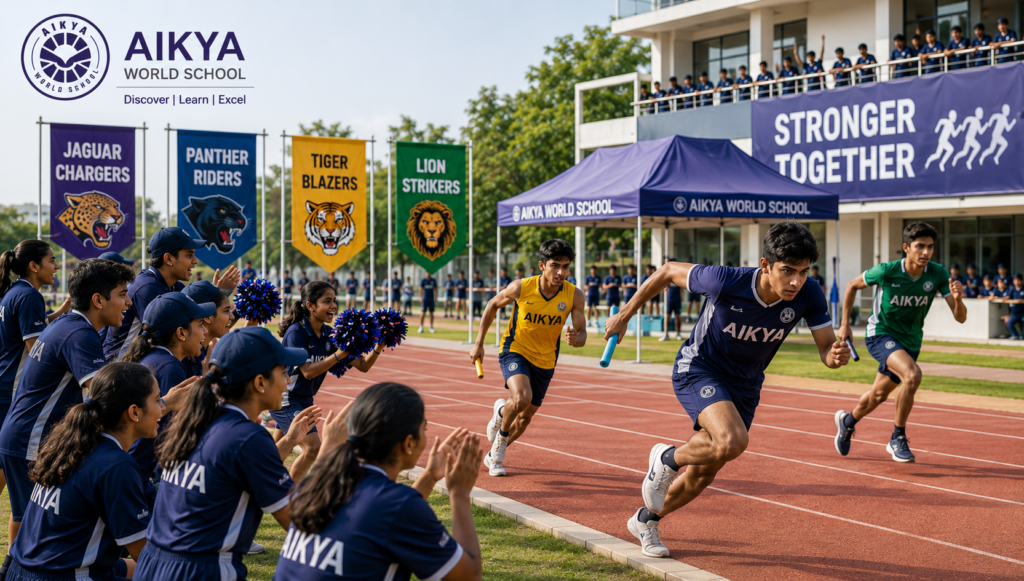
How Do Sports Benefit Students Academically?
Many parents worry that spending time on sports may affect academic performance. However, research consistently shows that physically active students often perform better in school because sports improve concentration, discipline, and overall cognitive function.
Better Concentration
Regular physical activity increases blood flow to the brain, helping students stay focused during lessons and examinations.
Improved Memory
Exercise supports brain function and information retention, making it easier for students to remember concepts learned in class.
Greater Discipline
Students who balance sports and academics learn to:
- Follow routines
- Meet deadlines
- Stay committed to goals
These habits translate into better classroom performance.
Higher Attendance
Students involved in school sports often feel a stronger sense of belonging, which encourages regular school attendance and active participation.
Better Academic Performance
Studies suggest that physically active children are more likely to demonstrate:
- Improved concentration
- Enhanced problem-solving abilities
- Greater classroom engagement
- Stronger time management skills
Sports complement academic learning rather than competing with it.
What Role Does Sports Play in Shaping a Student’s Character?
Character is built through experiences, and sports provide countless opportunities for personal growth.
Integrity
Students learn the importance of honesty, fairness, and following rules.
Perseverance
Every athlete experiences setbacks. Sports teach children to keep trying, even when success doesn’t come immediately.
Responsibility
Students become accountable for:
- Attending practice
- Supporting teammates
- Managing equipment
- Representing their school positively
Resilience
Resilience is one of the greatest gifts sports provide.
Children learn that failure is not the opposite of success it is part of the journey.
Decision-Making
Sports require quick thinking under pressure.
Children develop confidence in making decisions independently while considering the needs of the team.
What Are the Physiological Benefits of Sports for Students?
Beyond skill development, sports play a vital role in children’s overall health.
Cardiovascular Health
Running, swimming, cycling, and field sports strengthen the heart and improve endurance.
Strong Bones and Muscles
Weight-bearing activities support healthy bone development during childhood.
Better Immunity
Active children generally enjoy stronger immune systems and improved overall well-being.
Improved Posture
Sports strengthen core muscles, helping children maintain healthy posture despite increasing screen time.
Greater Flexibility
Stretching and movement improve flexibility, reducing the risk of injuries.
Better Coordination
Sports enhance balance, agility, and coordination, making everyday activities easier and safer.
Sports vs Screen Time
Today’s children spend more time on digital devices than ever before.
While technology offers learning opportunities, excessive screen time can contribute to:
- Reduced physical activity
- Poor posture
- Eye strain
- Sleep disturbances
- Lower social interaction
Sports provide a healthy balance by encouraging movement, face-to-face communication, and active learning.
Rather than replacing technology completely, parents should aim for a balanced routine that includes academics, recreational screen time, and regular physical activity.
How Sports Support Learning at Aikya World School
At Aikya World School, sports are an important part of creating a balanced and holistic learning experience. Students get opportunities to participate in a range of sporting activities, including basketball, football, pickleball, cricket, kho-kho and other physical activities. These experiences allow children to stay active while developing important skills such as teamwork, discipline, communication, coordination, decision-making and perseverance.
Different sports provide students with different learning experiences. Basketball and football encourage teamwork, communication and quick decision-making, while cricket helps students develop concentration, coordination and strategic thinking. Pickleball encourages agility, hand-eye coordination and adaptability, while kho-kho promotes speed, teamwork and awareness.
Through its focus on sports and other co-curricular opportunities, Aikya World School aims to provide students with a learning environment where academic development, physical well-being and personal growth go hand in hand.
By providing opportunities for basketball, football, cricket, pickleball and kho-kho in school, Aikya encourages students to experience the benefits of sports as part of a broader approach to holistic education.
For parents searching for the Top CBSE school in Bangalore for holistic development, selecting a school that prioritizes sports can have a lasting impact on a child’s overall growth and future success.
Conclusion
The benefits of sports for students extend far beyond physical fitness. The Sports in school help children become healthier, more confident, emotionally resilient, socially responsible, and academically focused individuals. They develop leadership, teamwork, discipline, communication, and decision-making skills that remain valuable throughout life.
When combined with quality academics, sports create a well-rounded education that prepares students not just for examinations, but for future careers and everyday challenges.
At Aikya World School, we believe every child deserves an education that balances academic excellence with sports, co-curricular activities, and holistic development. Our student-centered approach encourages children to explore their interests, stay active, and build essential life skills in a supportive environment.
Give Your Child the Advantage of Holistic Learning
- Book a Campus Visit
- Speak to Our Admissions Team
- Submit an Admissions Enquiry
Discover how Aikya World School helps students grow into confident, capable, and future-ready individuals.
Frequently Asked Questions
1. What are the benefits of sports for students?
Sports improve physical health, mental well-being, teamwork, leadership, confidence, discipline, and academic performance.
2. Why are sports important in a student’s life?
Sports help students develop essential life skills, stay physically active, reduce stress, and build healthy habits.
3. How do sports improve academic performance?
Regular physical activity enhances concentration, memory, discipline, and classroom engagement, contributing to better academic outcomes.
4. What social skills do students learn through sports?
Students develop communication, teamwork, empathy, leadership, cooperation, and conflict-resolution skills.
5. What are the physiological benefits of sports for students?
Sports strengthen the heart, bones, muscles, immunity, flexibility, posture, and coordination.