
For many parents, choosing a school is about much more than academics. They want their child to grow into someone who is healthy, confident, curious and ready to face new challenges.
That is where swimming in schools can make a meaningful difference. Swimming gives children an opportunity to develop physical fitness while also practising concentration, discipline, coordination and perseverance. For parents looking at schools in Bangalore in 2026, access to well-planned sports and physical education can therefore be an important part of the bigger school experience.
But swimming is not simply about learning different strokes. With the right guidance and safety practices, it can become an experience through which children learn skills that stay with them far beyond the swimming pool.
Why Is Swimming Important for Children?
Swimming is a full-body physical activity that encourages children to move, practise coordination and become more comfortable in the water.
It can contribute to several areas of development:
- Physical fitness: Regular swimming provides an active form of exercise.
- Coordination: Children learn to coordinate their arms, legs, breathing and body movements.
- Endurance: Repeated practice can help children gradually build stamina.
- Confidence: Learning a new skill can give children a strong sense of achievement.
- Discipline: Swimming requires children to listen, practise techniques and follow instructions.
- Water awareness: Structured lessons can introduce children to important water-safety habits.
The World Health Organization estimates around 300,000 drowning deaths globally each year, with children particularly vulnerable. WHO also notes that children under five account for nearly a quarter of drowning deaths worldwide. These figures underline why swimming education and water-safety awareness deserve attention, alongside close adult supervision.
Importantly, learning to swim does not make a child completely safe around water. The CDC and American Academy of Pediatrics emphasise that children still need close and constant supervision around water, even after swimming lessons.
How Can Swimming Support Children’s Confidence?
Think about the first time a child enters a swimming pool.
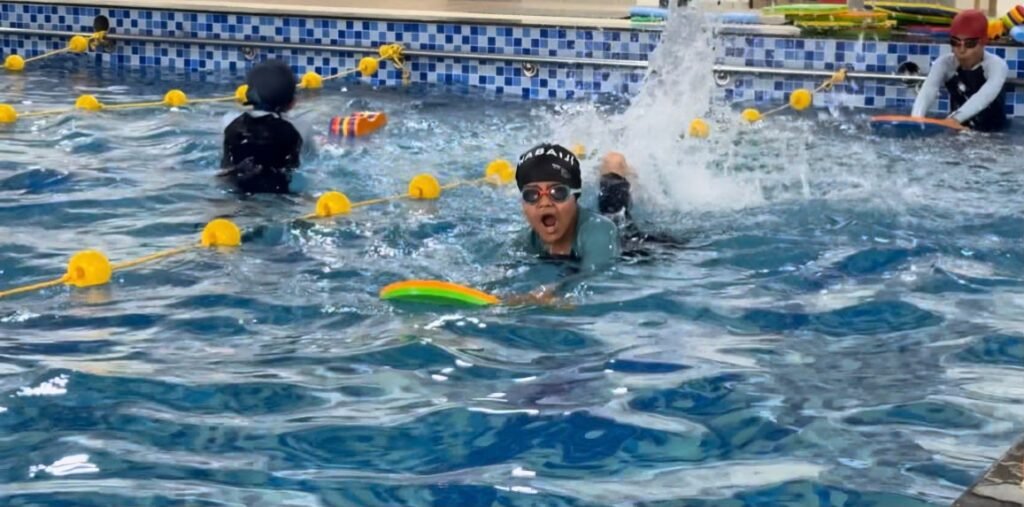
For some children, the water feels exciting. For others, it can feel unfamiliar or intimidating. Learning gradually with encouragement rather than pressure can turn that uncertainty into confidence.
A child may begin by learning to float, then move on to kicking, breathing, strokes and eventually more independent movement in the water.
Each small achievement matters.
Swimming can teach children that progress does not always happen immediately. Sometimes, improvement comes from trying again, listening carefully and practising patiently.
That mindset can extend beyond sports.
A child who learns to approach a challenging swimming skill step by step is also practising perseverance, self-belief and goal-setting qualities that can support learning in other areas of life.
Swimming Can Teach Important Life Skills
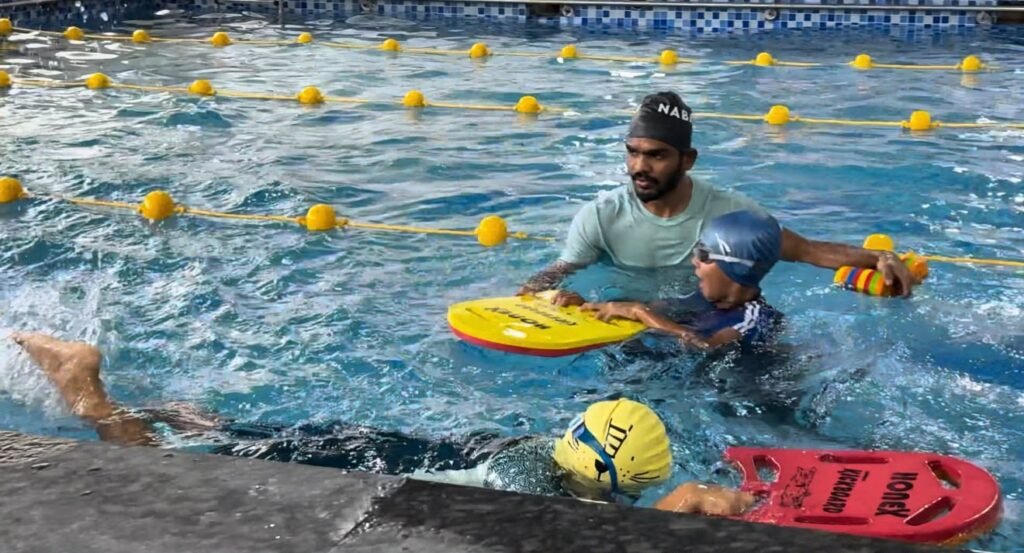
Swimming lessons can become a practical setting for developing life skills learning that children use every day.
Children can learn to:
- Follow instructions and pay attention to guidance.
- Practise consistently rather than expecting instant results.
- Set small goals and work towards them.
- Manage hesitation when trying something unfamiliar.
- Respect rules designed to keep everyone safe.
- Work alongside others during group activities.
- Take responsibility for their equipment and behaviour.
These experiences are especially valuable because children are learning through action rather than simply hearing about concepts such as discipline or perseverance.
Why Does Swimming Belong in a Holistic School Experience?
A child’s school years are about more than textbooks, tests and grades.
The CBSE 2026–27 curriculum describes Physical Education and Well-being as an important part of holistic education, covering physical, mental, emotional and social dimensions of development. It also identifies skills such as self-discipline, perseverance, cooperation, empathy and decision-making as part of physical education and well-being.
This is where swimming can complement classroom learning.
A well-rounded school experience can give children opportunities to:
- learn academically;
- participate in sports;
- develop creative interests;
- collaborate with peers;
- build confidence;
- practise healthy habits; and
- discover their own strengths.
Swimming does not replace academic learning. Instead, it can become one part of an environment where children are encouraged to develop mind and body together.
What Should Parents Look for in a School Swimming Programme?
If swimming is an important factor when comparing schools, look beyond the words “swimming pool” on a school website.
Parents can ask:
- Is swimming taught in a structured manner?
- Who supervises children during sessions?
- Are instructions appropriate for the child’s age and ability?
- Are clear pool-safety rules followed?
- Is the pool properly maintained?
- Are children introduced to water-safety awareness?
- Is there a progression for children who are beginners?
- Are students encouraged without being pushed beyond their comfort level?
- Does swimming form part of the school’s broader sports and physical education approach?
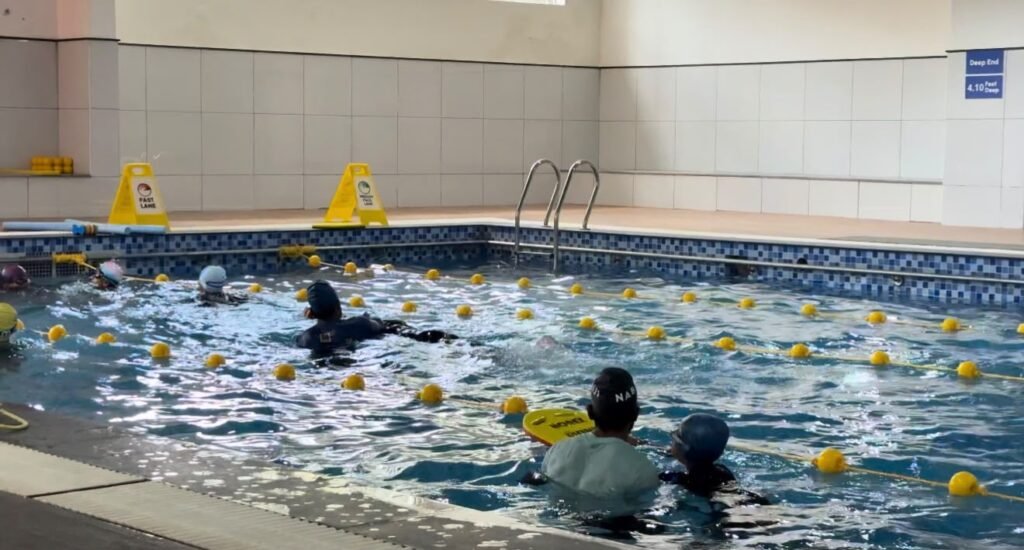
Safety should always remain the priority. The CDC recommends teaching children basic swimming and water-safety skills while maintaining close supervision around water.
What Is the Advantage of a Temperature-Controlled Swimming Pool?
For children, the swimming environment matters.
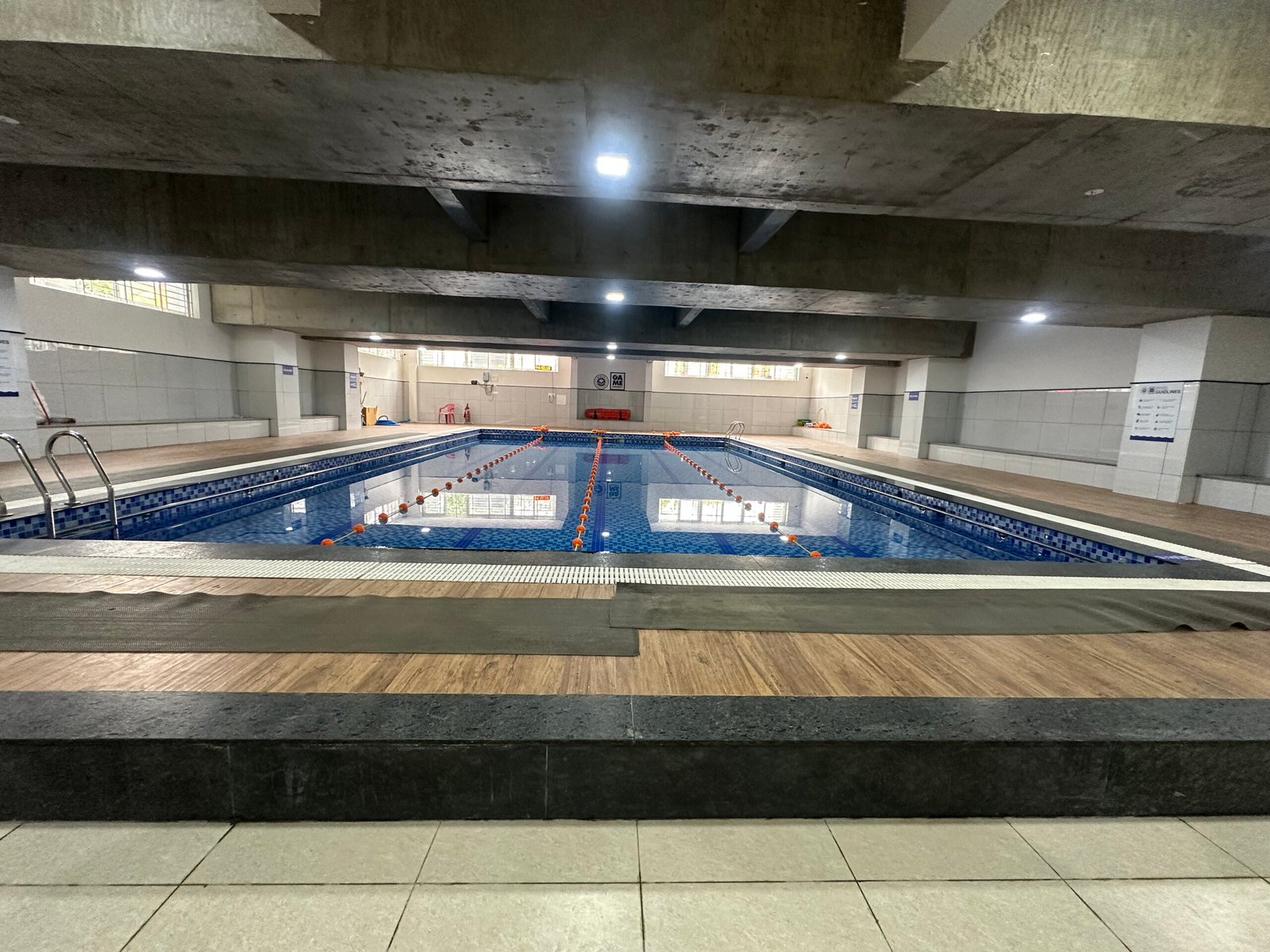
A temperature-controlled swimming pool allows water temperature to be regulated within a suitable range rather than depending entirely on changing outdoor conditions.
For a school, this can offer a more consistent environment for swimming sessions.
For children, a comfortable pool environment can make it easier to focus on learning movements and techniques rather than being distracted by uncomfortable water conditions.
It can also support a more consistent approach to swimming as part of the school’s sports environment, subject of course to the school’s schedule, operating conditions and safety protocols.
For parents, the bigger consideration is not simply whether a school has a pool. It is whether the pool is part of a safe, structured and purposeful swimming experience.
Swimming at Aikya World School
At Aikya World School, Bangalore, swimming forms part of the school’s wider approach to physical activity and holistic development.
The school provides students with access to a temperature-controlled swimming pool, creating a dedicated environment for swimming within the school setting.
For a child, having sports facilities within the school can make physical activity feel like a natural part of the school day rather than something that always has to happen separately.
At Aikya, the swimming experience sits alongside the school’s broader focus on helping children learn through academics, sports, co-curricular experiences and hands-on opportunities.
Swimming, Sports and Holistic Development at Aikya
Swimming is one part of a much larger picture.
Aikya World School provides opportunities across sports and co-curricular activities, including basketball, football, pickleball, cricket, kho-kho,table tennis, carrom and chess.
These activities give children different ways to move, participate, collaborate and discover what they enjoy.
Some children may thrive on competition. Others may enjoy learning a new skill at their own pace. A holistic school environment should make room for both.
The goal is not to turn every child into an athlete. It is to help children develop healthy habits, confidence, resilience and an appreciation for staying active.
A Simple Takeaway for Parents
When evaluating a school, ask yourself:
Does the school give my child opportunities to learn beyond the classroom?
A strong sports environment can contribute to that answer.
Swimming can support:
- Fitness
- Coordination
- Confidence
- Discipline
- Perseverance
- Water-safety awareness
- Healthy active habits
And when these experiences are combined with academics, creativity, collaboration and experiential learning, children get more opportunities to grow as individuals.
Helping Your Child Grow Beyond the Classroom
The best school experiences give children more than knowledge for the next examination. They give them opportunities to discover what they can do, learn how to handle challenges and develop habits that can serve them well in the future.
Swimming in schools can be one such opportunity.
From fitness and coordination to confidence, discipline and water-safety awareness, swimming can contribute to a child’s development when it is taught in a safe, structured and supportive environment.
At Aikya World School, swimming is part of a broader approach to holistic learning, supported by sports, co-curricular experiences and opportunities for children to grow in different ways.
If you are exploring schools in Bangalore for your child, consider looking beyond the classroom. Visit the Aikya campus, explore the learning and sports facilities, and speak with the admissions team about your child’s journey.
For admissions enquiries, you can contact Aikya World School at 097399 49000 and plan a campus visit to understand the school experience firsthand.
Frequently Asked Questions
1. What are the benefits of swimming in schools?
Swimming in schools can support children’s physical fitness, coordination, confidence, discipline and perseverance. It can also provide an opportunity to introduce children to basic water-safety skills in a structured environment.
2. Why is swimming good for children?
Swimming is an active physical activity that can help children develop coordination, endurance and movement skills. It can also give children opportunities to build confidence as they learn and practise new skills.
3. What life skills can children learn through swimming?
Swimming can encourage skills such as discipline, patience, perseverance, following instructions, goal-setting, responsibility and confidence.
4. Does learning to swim make children completely safe around water?
No. Swimming lessons are an important layer of protection, but they do not eliminate drowning risk. Children still require close and constant adult supervision when they are in or near water.
5. What is a temperature-controlled swimming pool?
A temperature-controlled swimming pool uses systems to regulate water temperature, helping provide more consistent water conditions than a pool whose temperature depends entirely on the surrounding environment.