
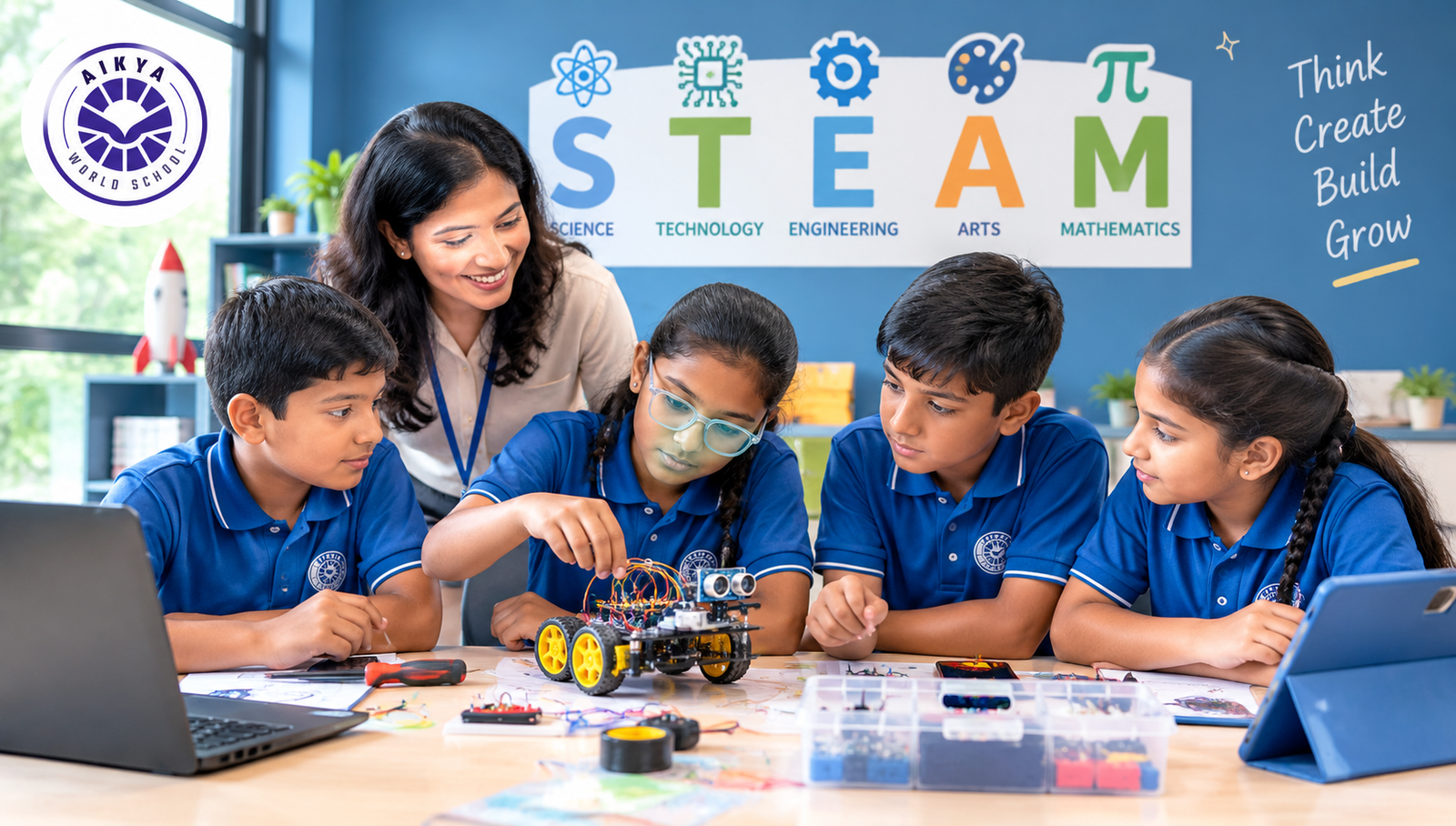
Think about the lessons your child remembers years later.
It may not be the chapter they memorised for a test. It could be the science experiment that finally made a difficult concept click, the model they built with classmates, or the school activity where they discovered they could solve a problem on their own.
That is the power of learning by doing.
For parents, choosing a school is no longer only about marks, curriculum and examinations. They also want to know whether their child will develop curiosity, confidence, creativity and practical skills for the future.
And when school admissions are approaching, understanding how children learn can be just as important as understanding what they learn.
What Is the Learning by Doing Method?
How does learning by doing work?
Learning by doing is an approach in which students actively apply knowledge through practical experiences, activities, experiments, projects and real-world problems.
Instead of only listening to an explanation, students get opportunities to:
- Explore a concept
- Ask questions
- Experiment
- Create something
- Solve a problem
- Make mistakes
- Reflect on what happened
- Improve their understanding
This is closely connected to experiential learning, which combines direct experience with reflection and application.
Is learning by doing simply “doing activities”?
Not necessarily.
A worksheet, experiment or project becomes meaningful when students understand why they are doing it and what they are expected to learn from it.
Reflection matters too. Experiential learning involves connecting an experience back to knowledge, skills and understanding.
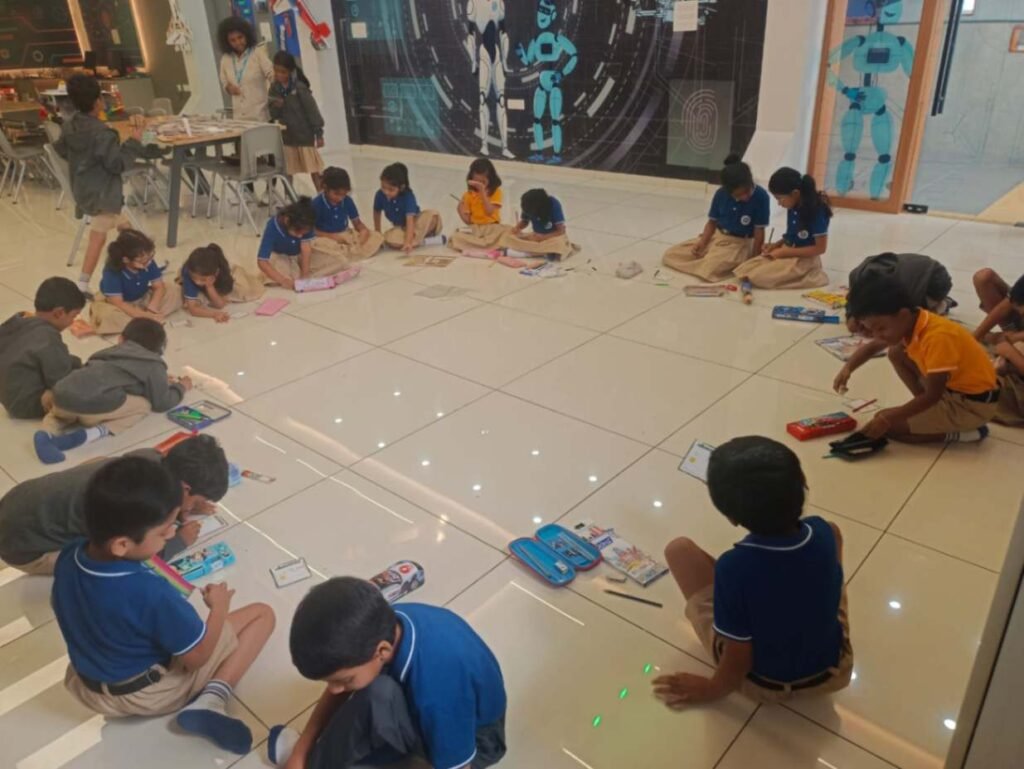
Why Is Learning by Doing Important for Children?
Does hands-on learning improve understanding?
When children apply an idea themselves, an abstract concept can become easier to understand.
For example, reading about circuits is different from actually connecting components, discovering why a bulb does not light and working out how to fix the circuit.
The child is not simply remembering information. They are using it.
CBSE’s competency-based education framework similarly emphasises real-world application, active learning, problem-solving and meaningful learning experiences rather than relying only on memorisation.
What skills can children develop?
Learning by doing can help children strengthen:
- Critical thinking
- Problem-solving
- Creativity
- Communication
- Collaboration
- Decision-making
- Curiosity
- Confidence
- Practical skills
A 2024 review of learning by doing in Indian educational institutions also links experiential approaches with hands-on activities, project-based learning, real-world application, critical thinking and creativity.
What Are the Key Benefits of Learning by Doing?
1. It makes learning meaningful
Children can see how classroom concepts connect with everyday life.
2. It encourages curiosity
Instead of waiting for answers, students are encouraged to investigate and ask questions.
3. It builds problem-solving skills
Real-world challenges rarely have one obvious answer. Children learn to explore possibilities and make decisions.
4. It develops confidence
Successfully completing a project or solving a problem gives children a sense of achievement.
5. It strengthens collaboration
Group projects teach students how to listen, communicate, divide responsibilities and work towards a shared goal.
6. It encourages learning from mistakes
A failed experiment or unsuccessful prototype becomes an opportunity to ask, “What can I change?”
How Does Learning by Doing Look in a School?
What are some examples of hands-on learning?
Learning by doing can happen across subjects.
Science: Conducting experiments and observing results.
Mathematics: Using measurements, budgeting or models to solve practical problems.
Language: Creating presentations, conducting interviews or writing for a real audience.
Social Science: Investigating community issues or exploring different perspectives.
STEAM: Designing, building and testing solutions using science, technology, engineering, arts and mathematics.
Sports: Applying strategy, teamwork and decision-making during play.
Field trips: Connecting classroom concepts with places, people and real-world experiences.
Can learning by doing happen outside the classroom?
Absolutely.
Field visits, sports, performances, community projects, exhibitions and collaborative activities can all become learning experiences when students are encouraged to observe, participate and reflect.
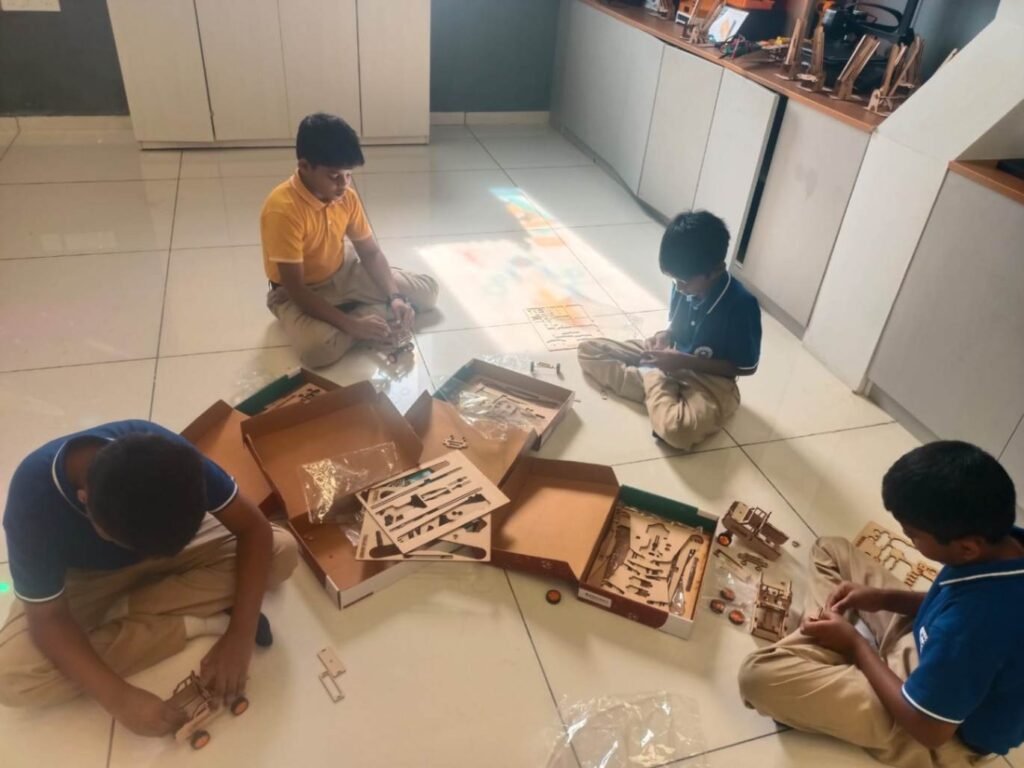
How Does Learning by Doing Prepare Children for the Future?
Does it build future-ready skills?
Yes, when thoughtfully designed, hands-on learning gives children opportunities to practise skills they may need beyond school.
They learn to:
- Understand a problem.
- Think of possible solutions.
- Try an approach.
- Evaluate what happened.
- Learn from feedback.
- Improve their work.
These habits are valuable in higher education, careers and everyday life.
CBSE’s competency-based approach specifically emphasises the application of knowledge and skills to real-world contexts, along with higher-order thinking and problem-solving.
Why does this matter for parents?
The future is difficult to predict. The goal, therefore, should not be to prepare children for one particular career.
It should be to help them become curious, adaptable and confident learners who can continue learning when circumstances change.
What Do the Top 3 Education Approaches Show?
1. CBSE’s Competency-Based Approach
CBSE places increasing emphasis on learning outcomes, real-world application, active learning and competency development. Its resources also include project-based and inquiry-based approaches.
2. Experiential Learning Models
Universities and education institutions describe experiential learning as a cycle involving experience, reflection, analysis and application. This reinforces an important point: hands-on learning works best when students think about what they experienced.
3. STEAM and Project-Based Learning
Hands-on STEAM projects allow students to connect different subjects while designing, experimenting and solving problems. This makes learning more interdisciplinary and closer to real-world problem-solving.
How Does Aikya World School Use Hands-On Learning?
How does hands-on learning fit into Aikya’s curriculum?
At Aikya World School, Jayanagar, the primary curriculum connects classroom lessons with real-world experiences through project-based learning, interactive discussions and hands-on activities. Its STEAM-focused approach also uses projects and experiments to develop creativity and problem-solving.
What other experiences support learning?
Learning extends beyond academics through sports, music, dance, drama and other co-curricular experiences. Aikya’s co-curricular programme is designed to support intellectual, physical, social and creative development.
This is important because holistic learning does not happen through one activity. Children need opportunities to think, create, communicate, move, collaborate and discover their interests.
How Can Parents Identify Genuine Learning by Doing?
What should parents look for during a school visit?
Instead of simply asking, “Does the school have experiential learning?”, ask:
- Do students work on real-world problems?
- Are children encouraged to ask questions?
- Do they conduct experiments and projects?
- Can students explain what they created or discovered?
- Are mistakes treated as part of learning?
- Are different subjects connected?
- Does the school provide hands-on STEAM opportunities?
Why should parents observe the learning environment?
A school’s website can tell you what it believes. A campus visit can help you understand what learning actually looks like.
Look for classrooms where children are participating rather than simply receiving information.
Final Thoughts
Learning by doing gives children something that memorisation alone cannot provide: the opportunity to experience knowledge in action.
When students experiment, create, collaborate, solve problems and reflect on their experiences, learning becomes more personal and meaningful. It also helps develop the confidence and practical thinking needed for a changing future.
For parents choosing a school, therefore, look beyond textbooks and marks. Ask whether the school gives children meaningful opportunities to explore, question, create and apply what they learn.
At Aikya World School in Jayanagar, hands-on learning, project-based experiences and STEAM opportunities form part of a broader approach to holistic development.
Frequently Asked Questions
1.What is learning by doing in education?
Learning by doing is an educational approach where students gain understanding by actively applying knowledge through activities, experiments, projects, problem-solving and real-world experiences.
2.What are the main benefits of learning by doing?
The key benefits include stronger understanding, creativity, problem-solving, collaboration, communication, confidence, curiosity and practical application of knowledge.
3.Is learning by doing the same as experiential learning?
They are closely related. Experiential learning generally involves learning through direct experience and reflecting on that experience, while learning by doing is commonly used to describe the practical, active element.
4.What are examples of learning by doing?
Examples include science experiments, STEAM projects, field trips, role-play, group projects, model building, community projects, simulations and practical problem-solving activities.
5.Is learning by doing suitable for primary school students?
Yes. Activities can be adapted to a child’s age and learning level. Younger children can learn through play, exploration, simple experiments, storytelling, building and observation.